
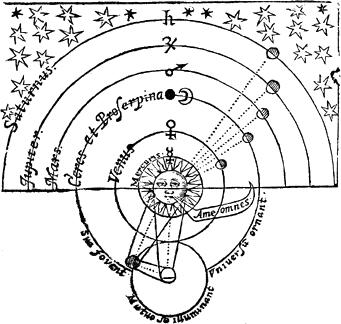
About This Book
The author argues that the Moon may be a second habitable world, assembling probable astronomical and natural philosophical observations to support this claim. He examines lunar appearance, phases, and eclipses to argue for reflective rather than self-luminous light, compares surface features to terrestrial geography, and considers whether an atmosphere, water, and vegetation could exist. He explores implications for inhabitants' bodies and senses, discusses mechanisms of travel and communication between Earth and Moon, and answers common objections by weighing probabilities rather than claiming certainty. Throughout the discourse he interweaves empirical observation, thought experiments, and moral and theological reflections on the plurality of worlds.
About the Author
You May Also Like
 Laokoon: Oder, Über die Grenzen der Malerei und Poesie
by Gotthold Ephraim Lessing
Laokoon: Oder, Über die Grenzen der Malerei und Poesie
by Gotthold Ephraim Lessing
 Savage Galahad
by Bryce Walton
Savage Galahad
by Bryce Walton
 On Sameness and Identity: A Psychological Study / Being a Contribution to the Foundations of a Theory of Knowledge
by George Stuart Fullerton
On Sameness and Identity: A Psychological Study / Being a Contribution to the Foundations of a Theory of Knowledge
by George Stuart Fullerton
 La culture des idées
by Remy de Gourmont
La culture des idées
by Remy de Gourmont
 Four Weird Tales
by Algernon Blackwood
Four Weird Tales
by Algernon Blackwood
 Tom Swift and His Big Tunnel; Or, The Hidden City of the Andes
by Victor Appleton
Tom Swift and His Big Tunnel; Or, The Hidden City of the Andes
by Victor Appleton