
About This Book
The work analyzes how language corresponds to reality by distinguishing equivocal, univocal, and derivative naming, simple and composite expressions, and what may be predicated of or present in a subject. It then classifies basic ways of being into a small set of fundamental types and examines their interrelations, focusing in particular on the category of quality. Quality is further divided into habits or stable dispositions, transient dispositions, natural capacities, and affective qualities tied to perception and bodily change, with examples and arguments about how these predicates relate to subjects. The text proceeds in short sections that define terms and give illustrative contrasts.
About the Author
More Books by This Author
6 picks




You May Also Like
6 picks
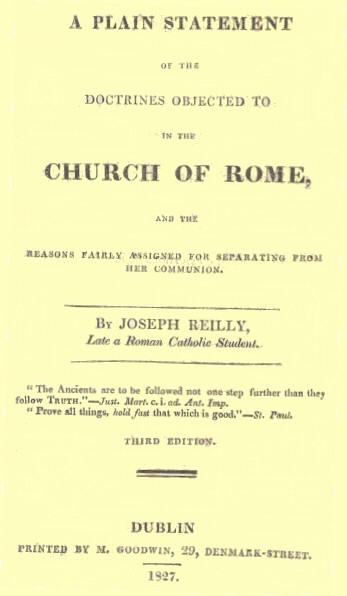 A Plain Statement of the Doctrines Objected to in the Church of Rome / And the Reasons Fairly Assigned for Separating From Her Communion
by Joseph Reilly
A Plain Statement of the Doctrines Objected to in the Church of Rome / And the Reasons Fairly Assigned for Separating From Her Communion
by Joseph Reilly
 What's Wrong with the World
by G. K. Chesterton
What's Wrong with the World
by G. K. Chesterton
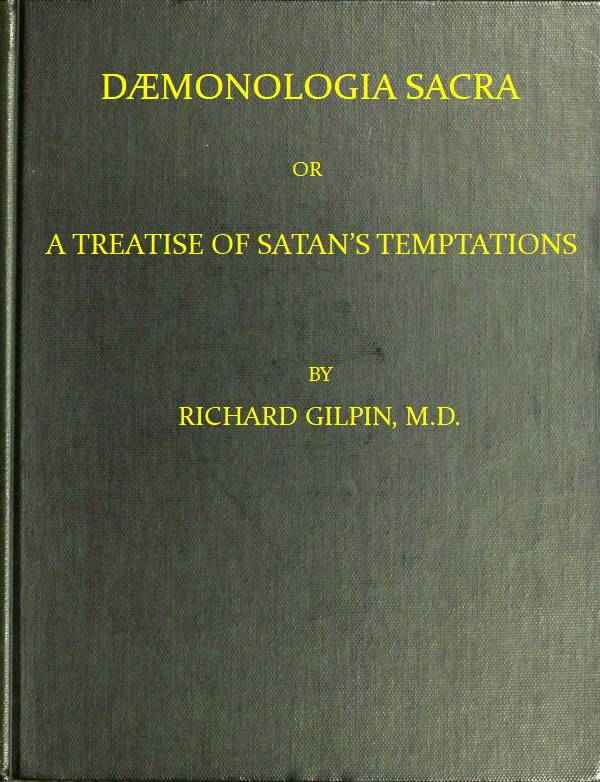 Dæmonologia Sacra; or, A Treatise of Satan's Temptations / In Three Parts
by Richard Gilpin
Dæmonologia Sacra; or, A Treatise of Satan's Temptations / In Three Parts
by Richard Gilpin
 Successful Methods of Public Speaking
by Grenville Kleiser
Successful Methods of Public Speaking
by Grenville Kleiser
 A Complete Grammar of Esperanto
by Ivy Kellerman Reed
A Complete Grammar of Esperanto
by Ivy Kellerman Reed
 The Pocket Lavater; or, The Science of Physiognomy / To which is added an inquiry into the analogy existing between brute and human physiognomy
by Johann Caspar Lavater
The Pocket Lavater; or, The Science of Physiognomy / To which is added an inquiry into the analogy existing between brute and human physiognomy
by Johann Caspar Lavater