
The Brothers-In-Law: A Tale of the Equatorial Islands; and The Brass Gun of the Buccaneers / 1901
Explore more books like this:
About This Book
Two linked adventure tales set among remote equatorial islands portray encounters between island communities, outsider visitors, and seafaring raiders. One story unfolds as a reminiscence about a past battle and its effects on local memory and relationships; the other follows the tense recovery and consequences of a brass cannon linked to pirate activity. Both pieces emphasize life at sea, the rhythms of island existence, and the uneasy mingling of loyalty, rivalry, and survival. The narratives use vivid maritime detail and local storytelling to frame compact episodes of conflict, moral choice, and the practical hardships of living in an isolated, reef-ringed world.
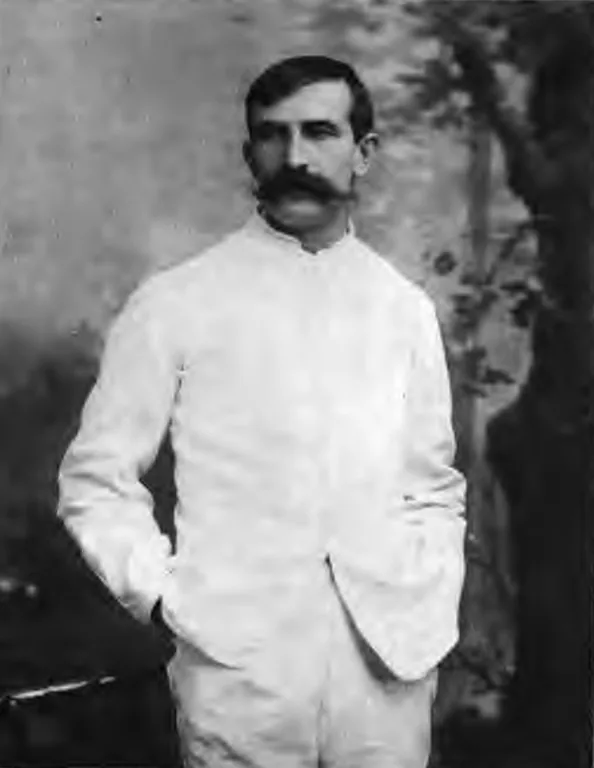
About the Author
More Books by This Author
6 picks
 "Chinkie's Flat" / 1904
by Louis Becke
"Chinkie's Flat" / 1904
by Louis Becke
 "Five-Head" Creek; and Fish Drugging in the Pacific / 1901
by Louis Becke
"Five-Head" Creek; and Fish Drugging in the Pacific / 1901
by Louis Becke
 "Martin of Nitendi"; and The River of Dreams / 1901
by Louis Becke
"Martin of Nitendi"; and The River of Dreams / 1901
by Louis Becke
 "Old Mary" / 1901
by Louis Becke
"Old Mary" / 1901
by Louis Becke
 "Pig-Headed" Sailor Men / From "The Strange Adventure of James Shervinton, and Other Stories" - 1902
by Louis Becke
"Pig-Headed" Sailor Men / From "The Strange Adventure of James Shervinton, and Other Stories" - 1902
by Louis Becke
 "The Gallant, Good Riou", and Jack Renton / 1901
by Louis Becke
"The Gallant, Good Riou", and Jack Renton / 1901
by Louis Becke
You May Also Like
6 picks
 Thirty Years on the Frontier
by Robert McReynolds
Thirty Years on the Frontier
by Robert McReynolds
 With Roberts to Pretoria: A Tale of The South African War
by G. A. Henty
With Roberts to Pretoria: A Tale of The South African War
by G. A. Henty
 John Vytal: A Tale of the Lost Colony
by William Farquhar Payson
John Vytal: A Tale of the Lost Colony
by William Farquhar Payson
 The Son of his Father
by Ridgwell Cullum
The Son of his Father
by Ridgwell Cullum
 The Eskimo Twins
by Lucy Fitch Perkins
The Eskimo Twins
by Lucy Fitch Perkins
 The White Rose of Memphis
by William C. Falkner
The White Rose of Memphis
by William C. Falkner