
About This Book
The author examines possible foundations for moral judgment—revelation, intuition, utility, evolution, and mysticism—asking whether religion is necessary to ethics and how each candidate stands up to modern needs. Revelation is criticized as authoritative but static and often containing archaic commands; intuition is presented as an inner moral sense; utility is treated as consequence-based assessment of right and wrong; evolution frames morality as developing with human capacities; mysticism is described as a personal realisation of the divine that inspires individuals but cannot serve as a universal rule. The analysis argues for a basis that accommodates human progress while acknowledging individual spiritual influence.
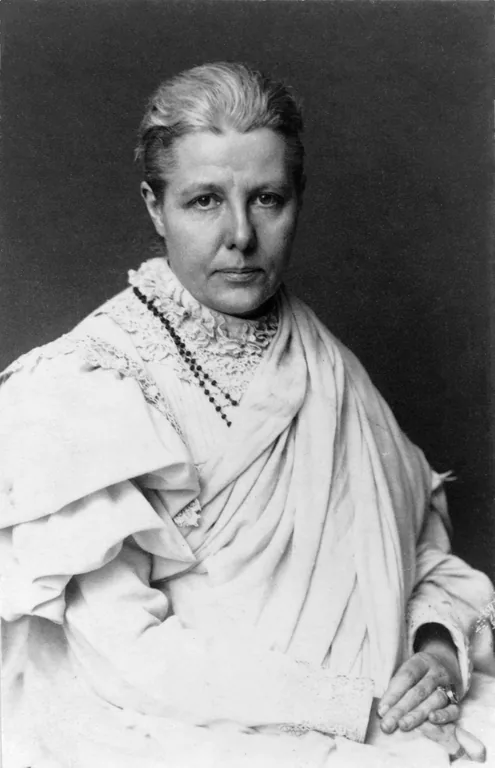
About the Author
More Books by This Author
6 picks
 An Introduction to Yoga
by Annie Besant
An Introduction to Yoga
by Annie Besant
 Annie Besant: An Autobiography
by Annie Besant
Annie Besant: An Autobiography
by Annie Besant
 Autobiographical Sketches
by Annie Besant
Autobiographical Sketches
by Annie Besant
 Avatâras / Four lectures delivered at the twenty-fourth anniversary / meeting of the Theosophical Society at Adyar, Madras, / December, 1899
by Annie Besant
Avatâras / Four lectures delivered at the twenty-fourth anniversary / meeting of the Theosophical Society at Adyar, Madras, / December, 1899
by Annie Besant
 Christianity: Its Evidences, Its Origin, Its Morality, Its History
by Annie Besant
Christianity: Its Evidences, Its Origin, Its Morality, Its History
by Annie Besant
 Death—and After?
by Annie Besant
Death—and After?
by Annie Besant
You May Also Like
6 picks
 A Night in the Luxembourg
by Remy de Gourmont
A Night in the Luxembourg
by Remy de Gourmont
 The Peak in Darien, With Some Other Inquiries Touching Concerns of the Soul and the Body / An Octave of Essays
by Frances Power Cobbe
The Peak in Darien, With Some Other Inquiries Touching Concerns of the Soul and the Body / An Octave of Essays
by Frances Power Cobbe
 Apollonius of Tyana, the Philosopher-Reformer of the First Century A.D.
by G. R. S. Mead
Apollonius of Tyana, the Philosopher-Reformer of the First Century A.D.
by G. R. S. Mead
 Thoughts of Saint Thérèse of the Child Jesus
by Saint de Lisieux Thérèse
Thoughts of Saint Thérèse of the Child Jesus
by Saint de Lisieux Thérèse
 The Symposium
by Xenophon
The Symposium
by Xenophon
 Our Eternity
by Maurice Maeterlinck
Our Eternity
by Maurice Maeterlinck