
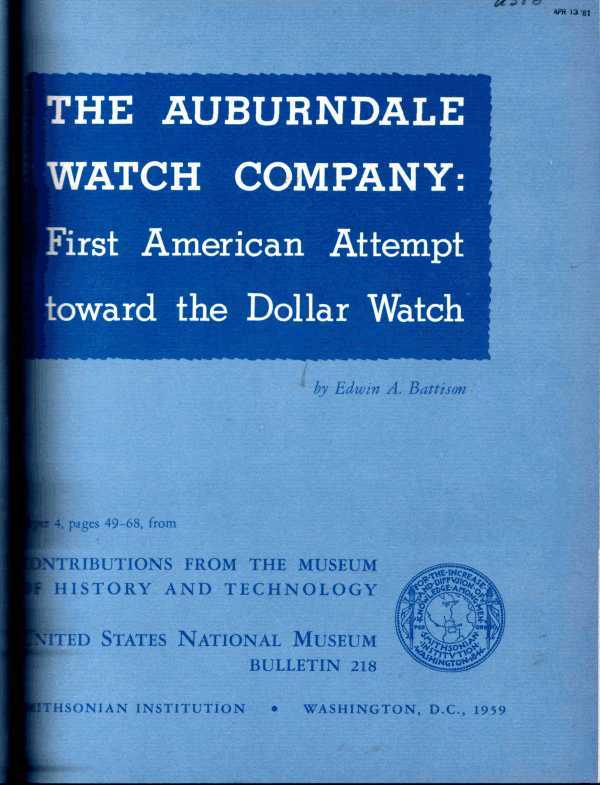
About This Book
The paper examines an American attempt to produce a low-cost, machine-made pocket watch by describing a revolving-train design derived from the tourbillon idea, its patent models, and mechanical arrangement. It analyzes key technical faults—insufficient barrel bearings, irregular ring-gear teeth, and an impractical ratio of spring turns to running time—that caused erratic power transfer and limited duration. The account traces development efforts, patent assignments, production variations, and early market reception, including returns of defective pieces. It closes by extracting practical lessons about the trade-offs between simplified design, manufacturing capabilities of the period, and the reasons the experiment failed to yield a reliable economical watch.
About the Author

More Books by This Author

You May Also Like
 American Hand Book of the Daguerreotype
by S. D. Humphrey
American Hand Book of the Daguerreotype
by S. D. Humphrey
 Journal of a Residence on a Georgian Plantation: 1838-1839
by Fanny Kemble
Journal of a Residence on a Georgian Plantation: 1838-1839
by Fanny Kemble
 William Penn
by Rupert Sargent Holland
William Penn
by Rupert Sargent Holland
 Inquiry Into the Origin and Course of Political Parties in the United States
by Martin Van Buren
Inquiry Into the Origin and Course of Political Parties in the United States
by Martin Van Buren
 State of the Union Addresses
by Richard M. Nixon
State of the Union Addresses
by Richard M. Nixon
 The Anti-Slavery Alphabet
by Hannah Townsend
The Anti-Slavery Alphabet
by Hannah Townsend