
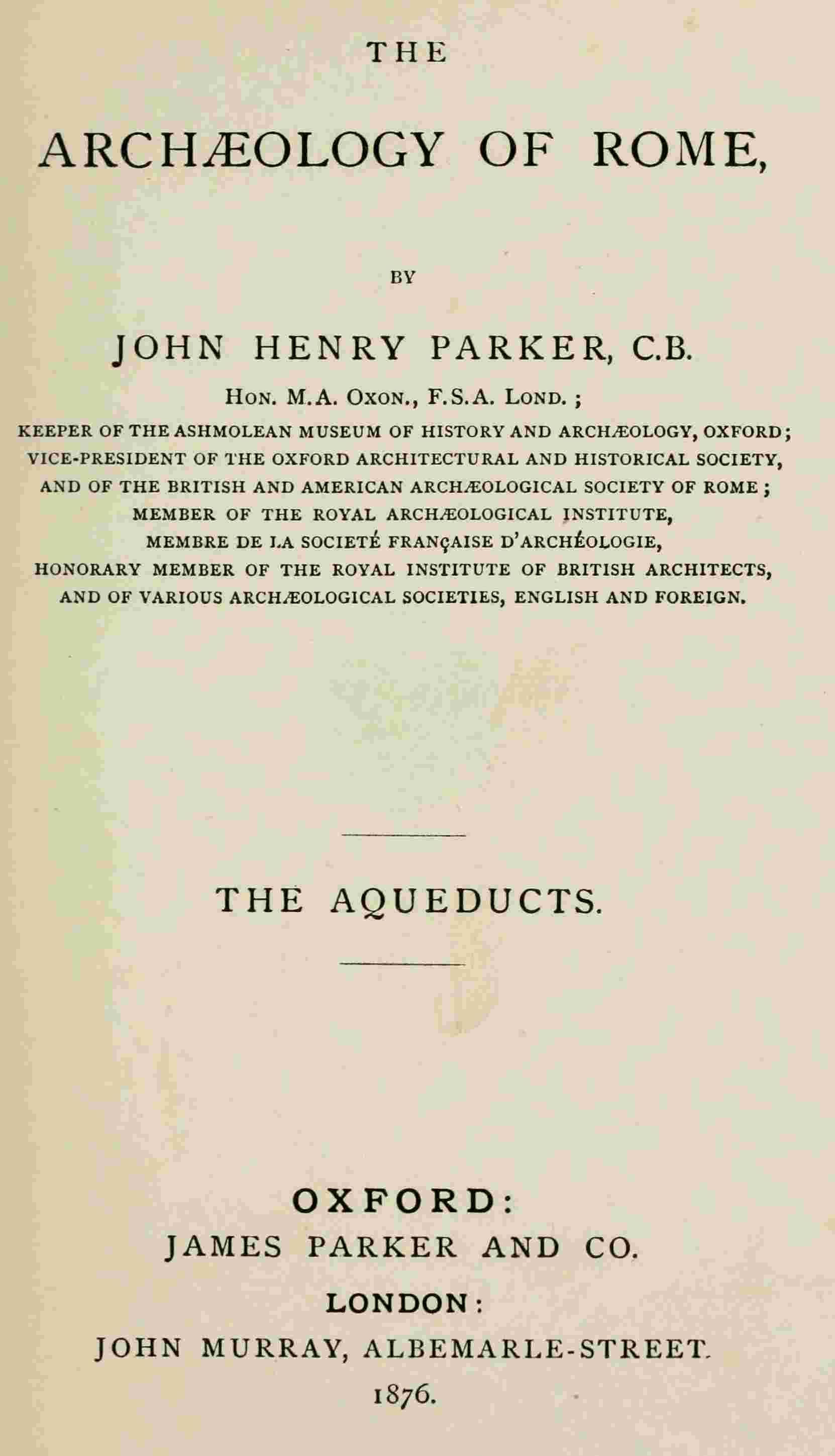
The archæology of Rome, Part 8
A thorough archaeological study traces the routes, construction, and remains of ancient Roman aqueducts, describing their channels (specus), arcades, reservoirs, and connections to baths and palaces. It maps principal lines from sources to city termini, examines above-ground arches and subterranean stretches, and explains distribution features such as castellum aquae and cisterns. The work details engineering feats at mountain sources and notable cascades, the reuse and alteration of conduits in later periods, and the challenges of identifying fragments in the urban landscape, illustrated by photographs and field observations that record surviving structures and their relation to city topography.
About This Book
A thorough archaeological study traces the routes, construction, and remains of ancient Roman aqueducts, describing their channels (specus), arcades, reservoirs, and connections to baths and palaces. It maps principal lines from sources to city termini, examines above-ground arches and subterranean stretches, and explains distribution features such as castellum aquae and cisterns. The work details engineering feats at mountain sources and notable cascades, the reuse and alteration of conduits in later periods, and the challenges of identifying fragments in the urban landscape, illustrated by photographs and field observations that record surviving structures and their relation to city topography.
About the Author
More Books by This Author
You May Also Like
 "Five-Head" Creek; and Fish Drugging in the Pacific / 1901
by Louis Becke
"Five-Head" Creek; and Fish Drugging in the Pacific / 1901
by Louis Becke
 "Pennsylvania Dutch," and other essays
by Phebe Earle Gibbons
"Pennsylvania Dutch," and other essays
by Phebe Earle Gibbons
 "Sterminator Vesevo" (Vesuvius the great exterminator) / Diary of the Eruption of April 1906
by Matilde Serao
"Sterminator Vesevo" (Vesuvius the great exterminator) / Diary of the Eruption of April 1906
by Matilde Serao
 21 Jahre in Indien. Dritter Theil: Sumatra.
by Heinrich Breitenstein
21 Jahre in Indien. Dritter Theil: Sumatra.
by Heinrich Breitenstein
 21 Jahre in Indien. Erster Theil: Borneo.
by Heinrich Breitenstein
21 Jahre in Indien. Erster Theil: Borneo.
by Heinrich Breitenstein
 A Bakony (1. kötet)
by Károly Eötvös
A Bakony (1. kötet)
by Károly Eötvös