

About This Book
A series of lectures analyzes mental phenomena such as belief, desire, perception, memory, emotion and will, questioning the idea that consciousness is a singular, irreducible essence and arguing for a neutral-stuff view that underlies both mental and physical descriptions. The author seeks to reconcile behaviourist insistence on observable psychology with developments in physics by treating mental events as constructions rather than material substances, and uses comparative psychology, clinical observation and philosophical analysis to support this stance. Chapters examine instinct and habit, causation, introspection, sensations and images, language and meaning, truth and belief, and the general characteristics and organization of mental life.
About the Author

More Books by This Author
 An essay on the foundations of geometry
by Bertrand Russell
An essay on the foundations of geometry
by Bertrand Russell
 Education and the good life
by Bertrand Russell
Education and the good life
by Bertrand Russell
 Free Thought and Official Propaganda
by Bertrand Russell
Free Thought and Official Propaganda
by Bertrand Russell
 Icarus
by Bertrand Russell
Icarus
by Bertrand Russell
 Index of the Project Gutenberg Works of Bertrand Russell
by Bertrand Russell
Index of the Project Gutenberg Works of Bertrand Russell
by Bertrand Russell
 Introduction to Mathematical Philosophy
by Bertrand Russell
Introduction to Mathematical Philosophy
by Bertrand Russell
You May Also Like
 The Japanese Spirit
by Yoshisaburo Okakura
The Japanese Spirit
by Yoshisaburo Okakura
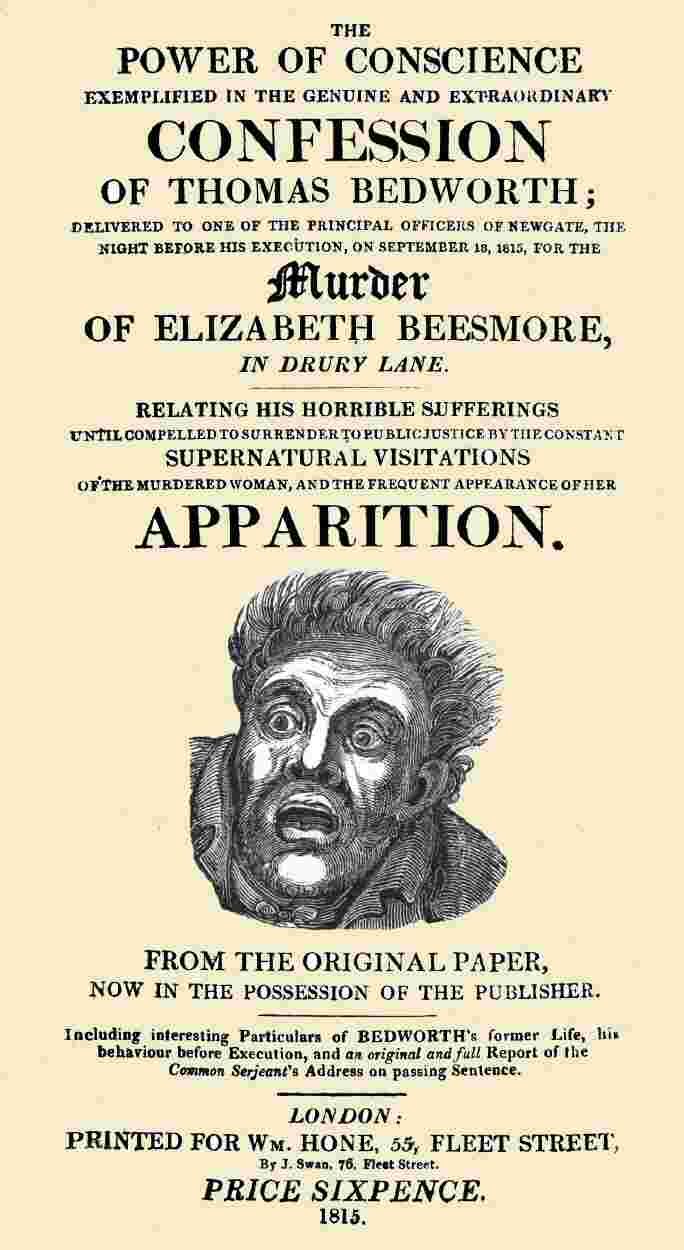 The Power of Conscience, exemplified in the genuine and extraordinary confession of Thomas Bedworth / delivered to one of the principal officers of Newgate, the night before his execution on September 18, 1815, for the murder of Elizabeth Beesmore in Drury lane. Relating his horrible sufferings until compelled to surrender to public justice by the constant supernatural visitations of the murdered woman, and the frequent appearance of her apparition. From the original paper now in the possession of the publisher. Including interesting particulars of Bedworth's former life, his behaviour before execution, and an original and full report of the Common Serjeant's address on passing sentence.
by Thomas Bedworth
The Power of Conscience, exemplified in the genuine and extraordinary confession of Thomas Bedworth / delivered to one of the principal officers of Newgate, the night before his execution on September 18, 1815, for the murder of Elizabeth Beesmore in Drury lane. Relating his horrible sufferings until compelled to surrender to public justice by the constant supernatural visitations of the murdered woman, and the frequent appearance of her apparition. From the original paper now in the possession of the publisher. Including interesting particulars of Bedworth's former life, his behaviour before execution, and an original and full report of the Common Serjeant's address on passing sentence.
by Thomas Bedworth
 Cratylus
by Plato
Cratylus
by Plato
 A Contribution to the Critique of Political Economy
by Karl Marx
A Contribution to the Critique of Political Economy
by Karl Marx
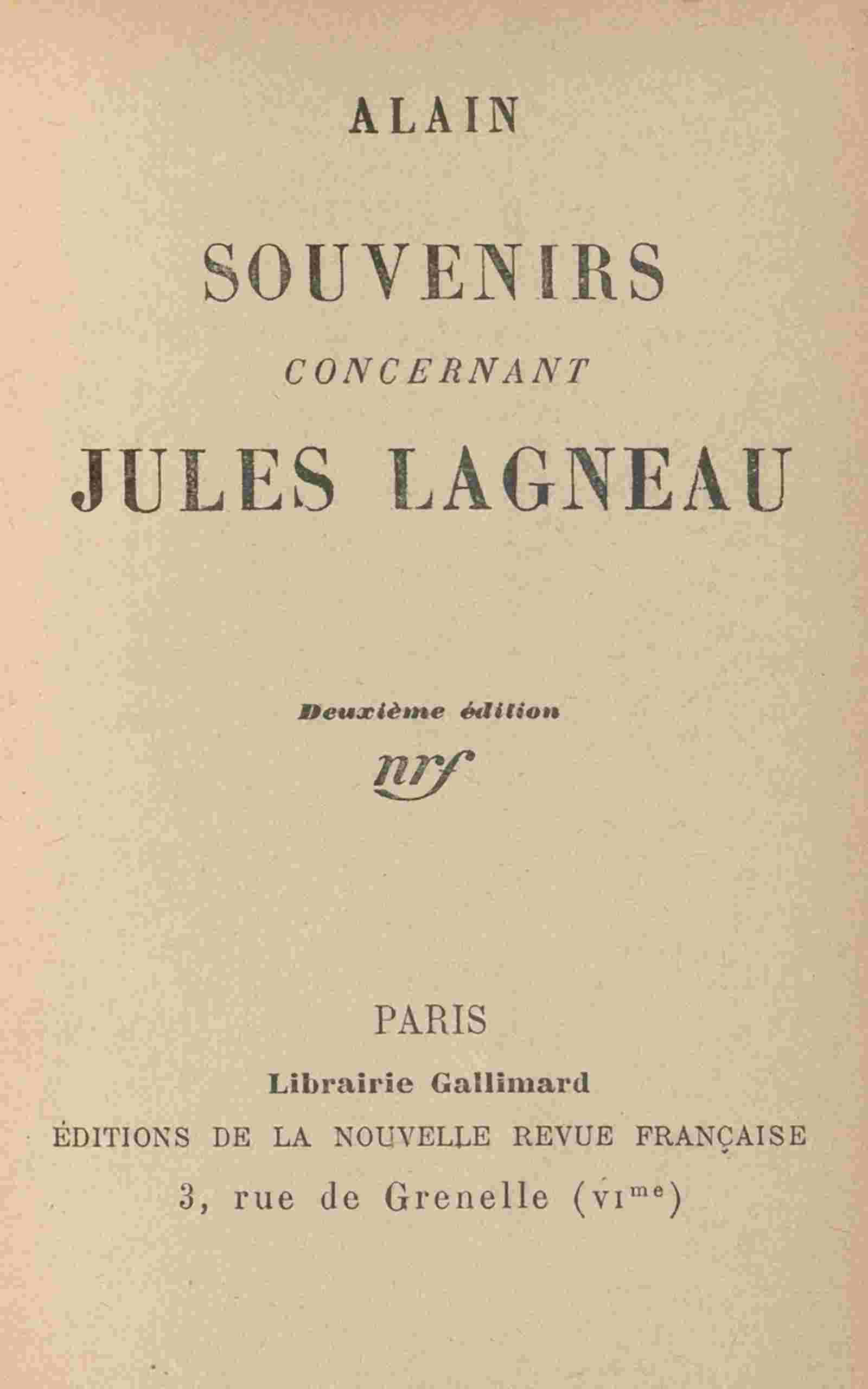 Souvenirs concernant Jules Lagneau
by Alain
Souvenirs concernant Jules Lagneau
by Alain
 Essays on the Materialistic Conception of History
by Antonio Labriola
Essays on the Materialistic Conception of History
by Antonio Labriola