

About This Book
The work treats ethics as both a science of conduct and an art of life, examining how to relate oneself rightly to a series of concrete objects—food, dress, work, property, knowledge, time, nature, art, animals, fellow humans, institutions, self, and God—assigning for each the corresponding duty, virtue, temptation, vice, and penalty. It argues that relations vary: inanimate goods call for sagacious self-interest, ideal objects require self-surrender, personal relations demand respect for personality and the common good, and social institutions deserve deference to collective ends. Practical advice and moral reasoning are interwoven, with religion presented as the consummation of ethical life.
About the Author
More Books by This Author
1 picks

You May Also Like
6 picks
![Two Dyaloges (c. 1549) / Wrytten in laten by the famous clerke, D. Erasm[us] of Roterodame, one called Polyphemus or the gospeller, the other dysposyng of thynges and names, translated in to Englyshe by Edmonde Becke. cover](/books/content/14500/OEBPS/2505839255930553770_titlepage.jpg) Two Dyaloges (c. 1549) / Wrytten in laten by the famous clerke, D. Erasm[us] of Roterodame, one called Polyphemus or the gospeller, the other dysposyng of thynges and names, translated in to Englyshe by Edmonde Becke.
by Desiderius Erasmus
Two Dyaloges (c. 1549) / Wrytten in laten by the famous clerke, D. Erasm[us] of Roterodame, one called Polyphemus or the gospeller, the other dysposyng of thynges and names, translated in to Englyshe by Edmonde Becke.
by Desiderius Erasmus
 Das hohe Ziel der Erkenntnis: Aranada Upanishad
by bey Omar Raschid
Das hohe Ziel der Erkenntnis: Aranada Upanishad
by bey Omar Raschid
 Social Environment and Moral Progress
by Alfred Russel Wallace
Social Environment and Moral Progress
by Alfred Russel Wallace
 Les opinions et les croyances
by Gustave Le Bon
Les opinions et les croyances
by Gustave Le Bon
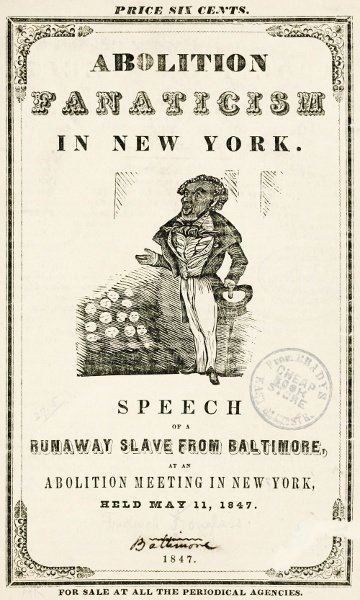 Abolition Fanaticism in New York / Speech of a Runaway Slave from Baltimore, at an Abolition / Meeting in New York, Held May 11, 1847
by Frederick Douglass
Abolition Fanaticism in New York / Speech of a Runaway Slave from Baltimore, at an Abolition / Meeting in New York, Held May 11, 1847
by Frederick Douglass
 St. Paul and Protestantism, with an Essay on Puritanism and the Church of England
by Matthew Arnold
St. Paul and Protestantism, with an Essay on Puritanism and the Church of England
by Matthew Arnold