
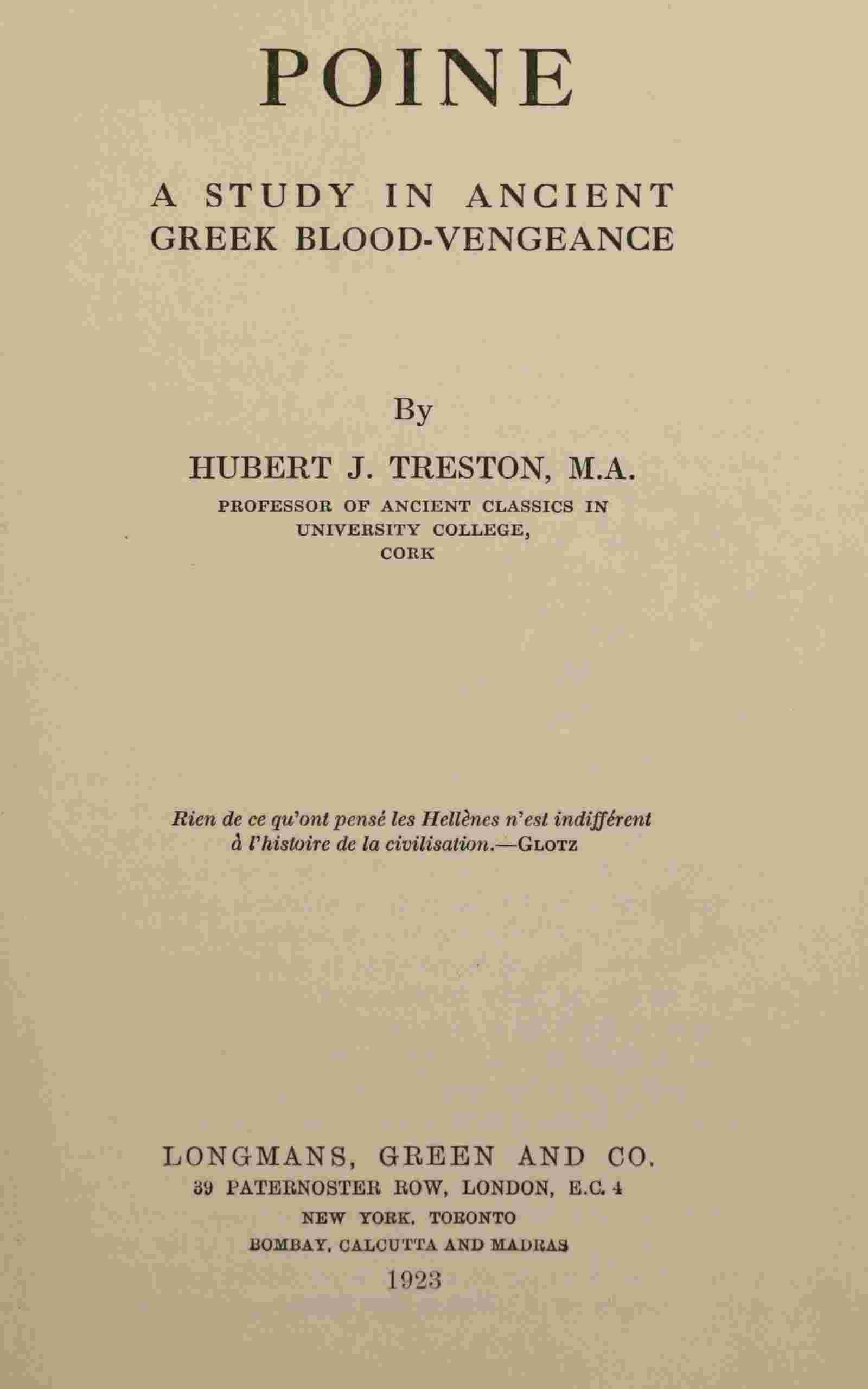
About This Book
This work examines ancient Greek systems of blood-vengeance by surveying comparative vendetta types and then analysing Homeric society to distinguish collective Pelasgian vengeance from the more restricted Achaean form. It explores religious dimensions such as ancestor worship, ritual pollution, the Erinnyes, and the emergence of purgation practices. It traces social and legal transformations in the post-Homeric period that culminate in Apolline influence and the formulation of homicide laws associated with Draco. It concludes by interpreting recurring homicide motifs in Attic tragedy through the preceding legal, religious, and social developments.
About the Author

You May Also Like
6 picks
 Constantinople, painted by Warwick Goble, described by Alexander Van Millingen
by Alexander Van Millingen
Constantinople, painted by Warwick Goble, described by Alexander Van Millingen
by Alexander Van Millingen
 The History of Roman Literature / From the Earliest Period to the Death of Marcus Aurelius
by Charles Thomas Cruttwell
The History of Roman Literature / From the Earliest Period to the Death of Marcus Aurelius
by Charles Thomas Cruttwell
 Abury, A Temple of the British Druids, With Some Others, Described
by William Stukeley
Abury, A Temple of the British Druids, With Some Others, Described
by William Stukeley
 James's Account of S. H. Long's Expedition, 1819-1820, part 4
by Edwin James
James's Account of S. H. Long's Expedition, 1819-1820, part 4
by Edwin James
 Yorkshire Family Romance
by Frederick Ross
Yorkshire Family Romance
by Frederick Ross
 Kultur-Kuriosa, Zweiter Band
by Max Kemmerich
Kultur-Kuriosa, Zweiter Band
by Max Kemmerich