
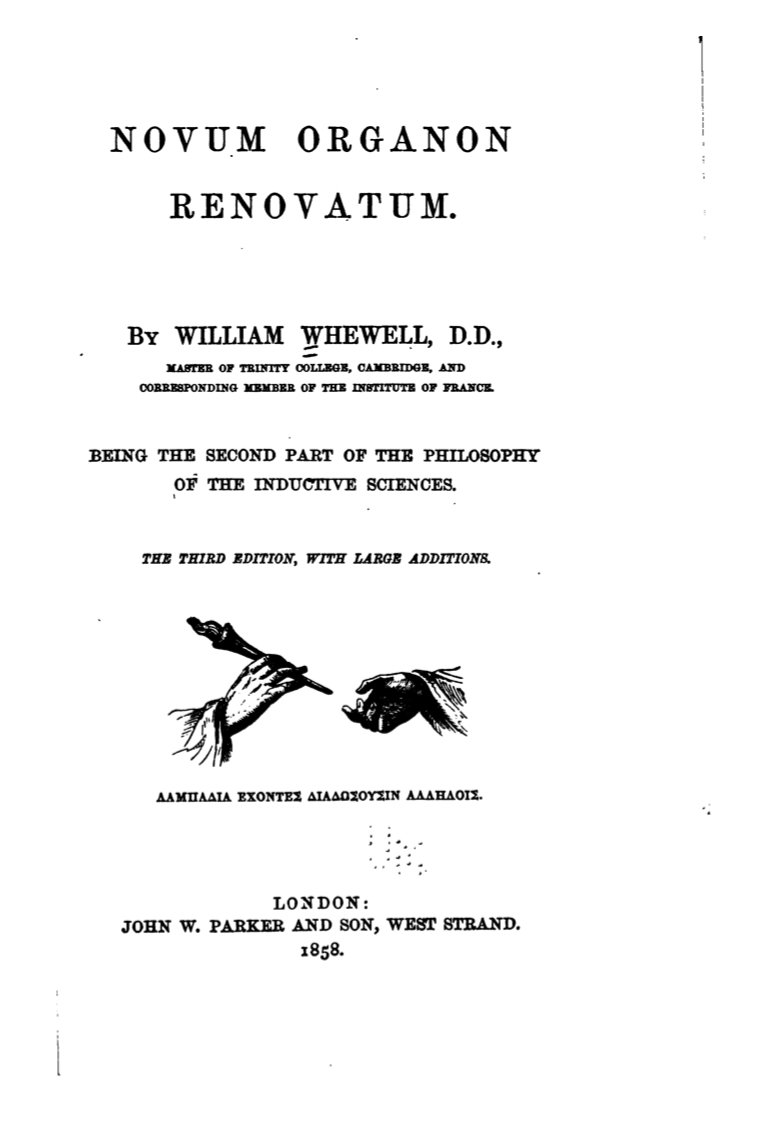
Novum organon renovatum / Being the second part of the philosophy of the inductive sciences
Explore more books like this:
About This Book
The author critiques and seeks to update Francis Bacon's program for a universal method of scientific discovery, arguing that while no mechanical art can produce invention or genius, studying historical scientific progress reveals recurring methods and principles. He surveys advances across the physical sciences to extract practical procedures—forms of induction, classification, gradation, use of curves, means, least squares, and residues—and offers guidance on observation, hypothesis-testing, and the interplay of ideas and facts. He emphasizes that metaphysical clarification accompanies empirical work, that different sciences require different approaches, and that method can refine but not replace individual sagacity in discovery.
About the Author

More Books by This Author
 Astronomy and General Physics Considered with Reference to Natural Theology
by William Whewell
Astronomy and General Physics Considered with Reference to Natural Theology
by William Whewell
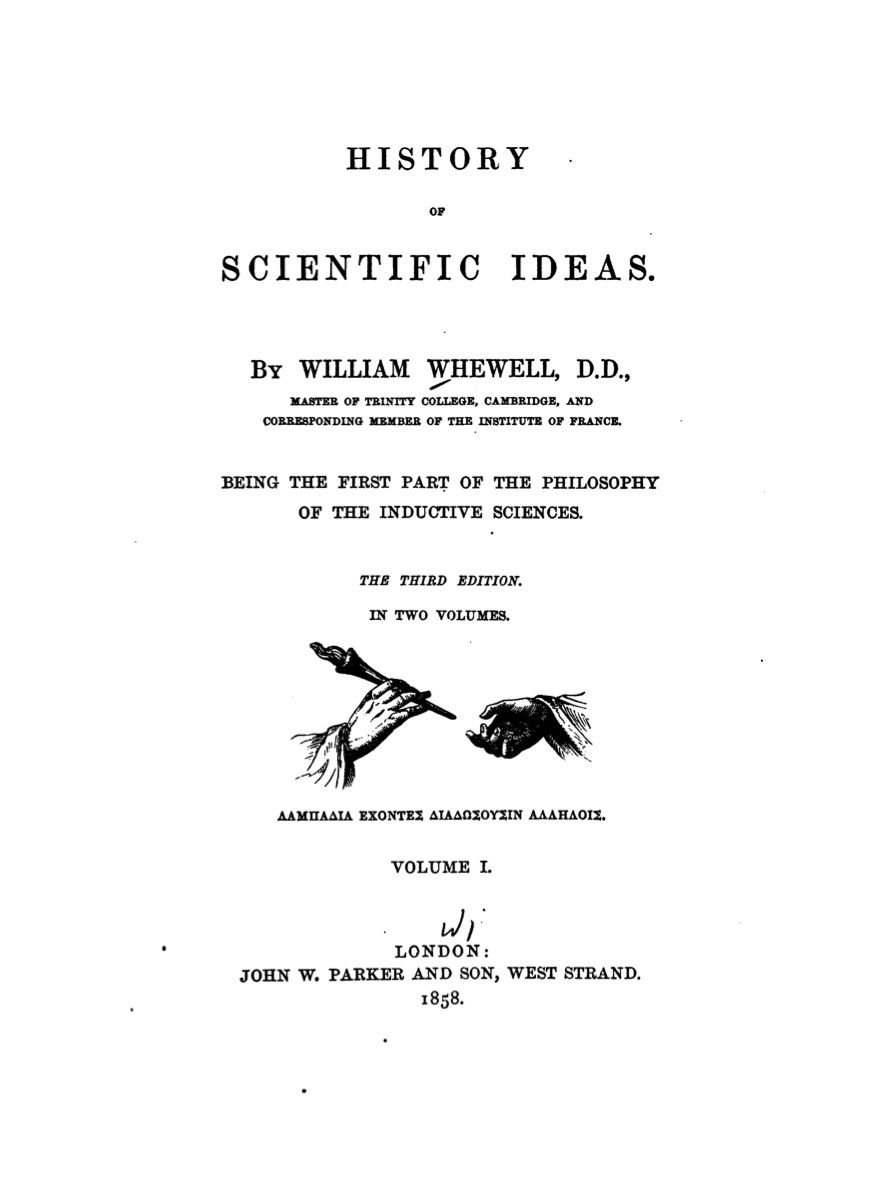 History of scientific ideas
by William Whewell
History of scientific ideas
by William Whewell
 History of the inductive sciences, from the earliest to the present time
by William Whewell
History of the inductive sciences, from the earliest to the present time
by William Whewell
 On the Philosophy of Discovery, Chapters Historical and Critical
by William Whewell
On the Philosophy of Discovery, Chapters Historical and Critical
by William Whewell
 The Plurality of Worlds
by William Whewell
The Plurality of Worlds
by William Whewell
You May Also Like
 Lessons in Life; A Series of Familiar Essays
by J. G. Holland
Lessons in Life; A Series of Familiar Essays
by J. G. Holland
 The Metaphysic of Christianity and Buddhism: A Symphony
by D. M. Strong
The Metaphysic of Christianity and Buddhism: A Symphony
by D. M. Strong
 La lutte pour la santé: essai de pathologie générale
by Charles Burlureaux
La lutte pour la santé: essai de pathologie générale
by Charles Burlureaux
 The Great Discovery
by Norman Maclean
The Great Discovery
by Norman Maclean
 Gamblers and Gambling
by Henry Ward Beecher
Gamblers and Gambling
by Henry Ward Beecher
 Het leven der bijen
by Maurice Maeterlinck
Het leven der bijen
by Maurice Maeterlinck