
Lapsuus, Poika-ikä, Nuoruus 1: Lapsuus
A first-person narrator recollects early life in episodic scenes that move from luminous childhood through restless adolescence to the solitude of young adulthood. Vivid portraits of family life, play, schooling, and household figures capture sensory detail and everyday ritual. Intimate memories and social observation are interwoven with introspective passages that trace emotional formation, early attachments, and awakening moral curiosity. As the narrator matures, nostalgia and disenchantment increase, producing a growing sense of isolation amid familiar surroundings. The work balances concrete domestic tableaux with reflective examination of memory, identity, and conscience.
About This Book
A first-person narrator recollects early life in episodic scenes that move from luminous childhood through restless adolescence to the solitude of young adulthood. Vivid portraits of family life, play, schooling, and household figures capture sensory detail and everyday ritual. Intimate memories and social observation are interwoven with introspective passages that trace emotional formation, early attachments, and awakening moral curiosity. As the narrator matures, nostalgia and disenchantment increase, producing a growing sense of isolation amid familiar surroundings. The work balances concrete domestic tableaux with reflective examination of memory, identity, and conscience.
About the Author

More Books by This Author
 "Bethink Yourselves!"
by graf Leo Tolstoy
"Bethink Yourselves!"
by graf Leo Tolstoy
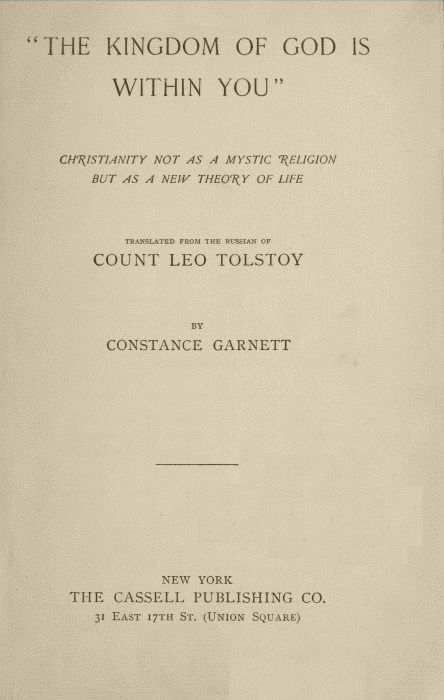 "The Kingdom of God Is Within You" / Christianity Not as a Mystic Religion but as a New Theory of Life
by graf Leo Tolstoy
"The Kingdom of God Is Within You" / Christianity Not as a Mystic Religion but as a New Theory of Life
by graf Leo Tolstoy
 "The Kingdom of God Is Within You" / Christianity Not as a Mystic Religion but as a New Theory of Life
by graf Leo Tolstoy
"The Kingdom of God Is Within You" / Christianity Not as a Mystic Religion but as a New Theory of Life
by graf Leo Tolstoy
 A Letter to a Hindu
by graf Leo Tolstoy
A Letter to a Hindu
by graf Leo Tolstoy
 A Russian Proprietor, and Other Stories
by graf Leo Tolstoy
A Russian Proprietor, and Other Stories
by graf Leo Tolstoy
 Anna Karenina
by graf Leo Tolstoy
Anna Karenina
by graf Leo Tolstoy
You May Also Like
"Bethink Yourselves!"
by graf Leo Tolstoy
 A Desperate Character and Other Stories
by Ivan Sergeevich Turgenev
A Desperate Character and Other Stories
by Ivan Sergeevich Turgenev
 A family of noblemen
by Mikhail Evgrafovich Saltykov
A family of noblemen
by Mikhail Evgrafovich Saltykov
 A Hero of Our Time
by Mikhail Iurevich Lermontov
A Hero of Our Time
by Mikhail Iurevich Lermontov
 A House of Gentlefolk
by Ivan Sergeevich Turgenev
A House of Gentlefolk
by Ivan Sergeevich Turgenev
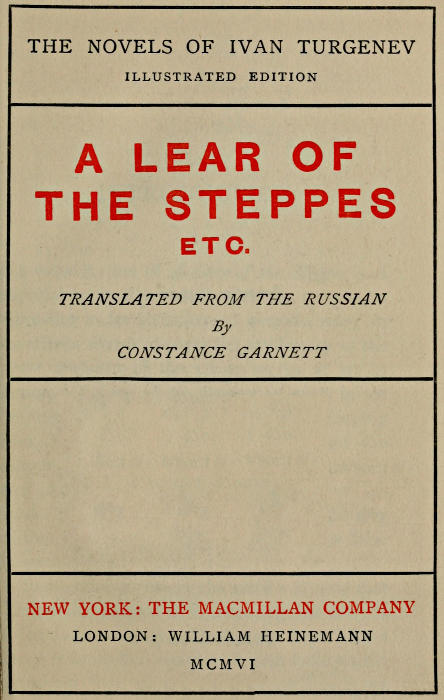 A Lear of the Steppes, etc.
by Ivan Sergeevich Turgenev
A Lear of the Steppes, etc.
by Ivan Sergeevich Turgenev