
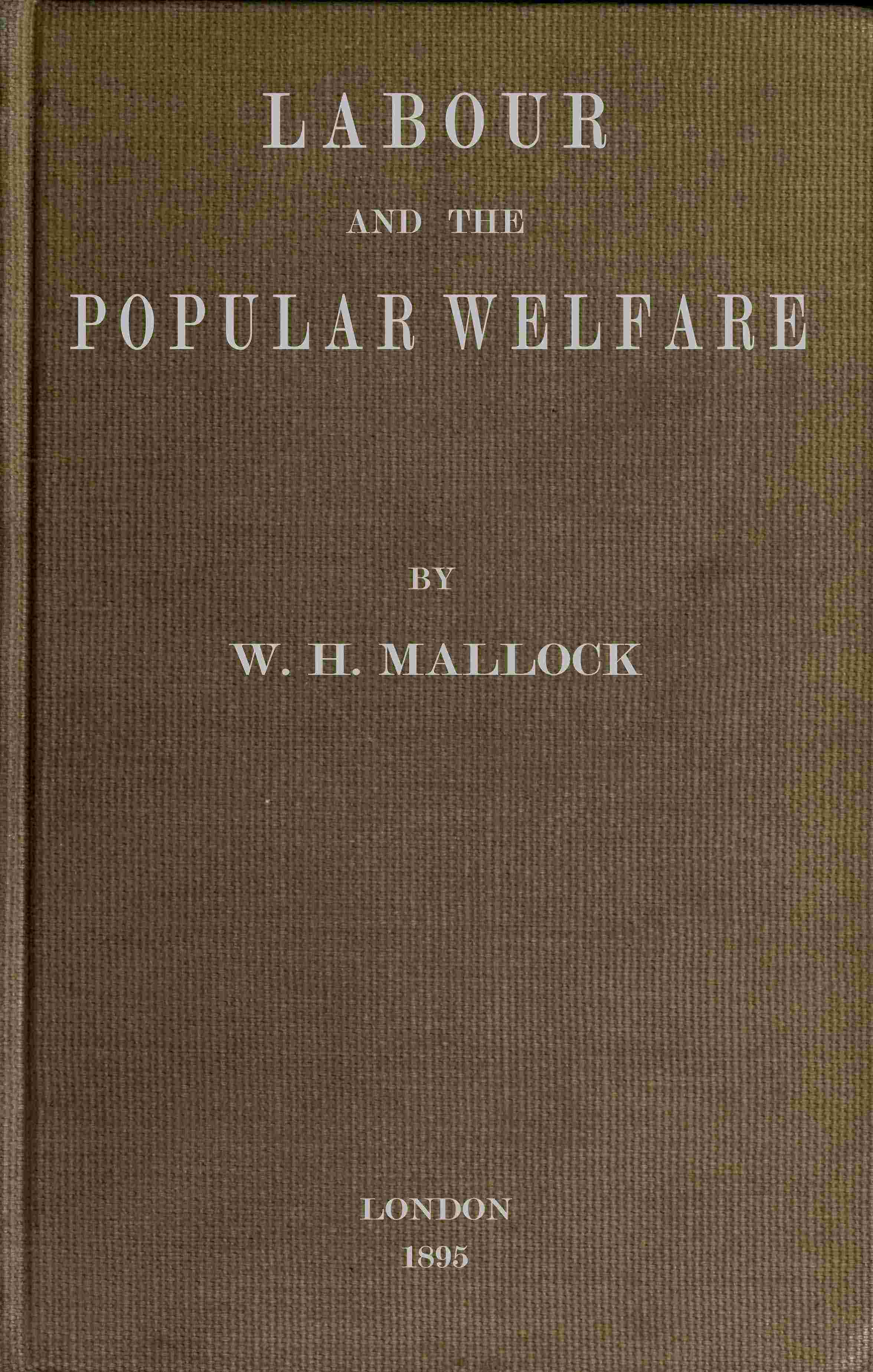
About This Book
The author examines the relations among labour, wealth, and public welfare by separating empirical data from argumentative claims, scrutinising statistics on national income, capital, and land-rental while insisting that approximate figures suffice for practical debate. He critiques socialist and collectivist proposals as founded on misinterpretations of economic facts, offers popular rather than purely philosophical exposition, and responds to contemporary critics. The work links measured interpretation of economic evidence to concrete social and political recommendations, stressing cautious, evidence-grounded policy over doctrinaire reforms.
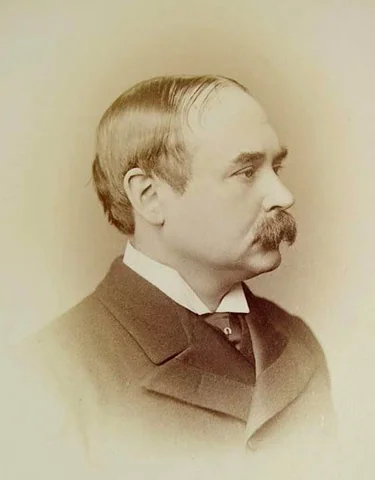
About the Author
More Books by This Author
6 picks
 A Critical Examination of Socialism
by W. H. Mallock
A Critical Examination of Socialism
by W. H. Mallock
 Aristocracy & Evolution / A Study of the Rights, the Origin, and the Social Functions of the Wealthier Classes
by W. H. Mallock
Aristocracy & Evolution / A Study of the Rights, the Origin, and the Social Functions of the Wealthier Classes
by W. H. Mallock
 Every Man His Own Poet; Or, The Inspired Singer's Recipe Book
by W. H. Mallock
Every Man His Own Poet; Or, The Inspired Singer's Recipe Book
by W. H. Mallock
 Is Life Worth Living?
by W. H. Mallock
Is Life Worth Living?
by W. H. Mallock
 Memoirs of Life and Literature
by W. H. Mallock
Memoirs of Life and Literature
by W. H. Mallock
 The New Paul and Virginia; Or, Positivism on an Island
by W. H. Mallock
The New Paul and Virginia; Or, Positivism on an Island
by W. H. Mallock
You May Also Like
6 picks
 Brief for the higher education of the negro
by Kelly Miller
Brief for the higher education of the negro
by Kelly Miller
 A Stake in the Land
by Peter A. Speek
A Stake in the Land
by Peter A. Speek
 Woman and the Republic / A Survey of the Woman-Suffrage Movement in the United States and a Discussion of the Claims and Arguments of Its Foremost Advocates
by Helen Kendrick Johnson
Woman and the Republic / A Survey of the Woman-Suffrage Movement in the United States and a Discussion of the Claims and Arguments of Its Foremost Advocates
by Helen Kendrick Johnson
 A marxizmus társadalomelmélete
by László Ottlik
A marxizmus társadalomelmélete
by László Ottlik
 State of the Union Addresses
by Grover Cleveland
State of the Union Addresses
by Grover Cleveland
 The Inhumanity of Socialism
by Edward F. Adams
The Inhumanity of Socialism
by Edward F. Adams