
About This Book
The essay offers a philosophic and psychological interpretation of Jewish history, seeking the inner logic that connects events and shapes collective identity. It proposes a synthetic periodization—biblical origins, a spiritual-political phase, a talmudic national-religious formation, the gaonic and subsequent rabbinic-philosophical and rabbinic-mystical hegemonies, and a modern period marked by enlightenment and moves toward emancipation. Major themes include election and national consciousness, the functions of priests, prophets, and scribes, the effects of exile and dispersion, and the interplay between religious thought and social-political reality. The work concludes by drawing moral and humanitarian lessons and by treating history as a means of national self-knowledge.
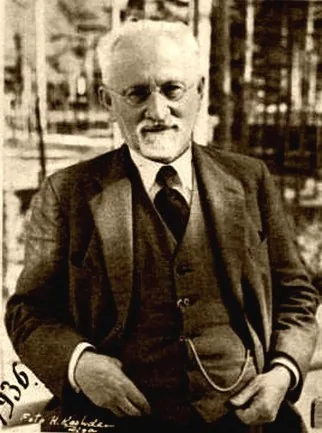
About the Author
You May Also Like
 The Philosophy of Natural Theology / An Essay in confutation of the scepticism of the present day
by William Jackson
The Philosophy of Natural Theology / An Essay in confutation of the scepticism of the present day
by William Jackson
 Saint Bonaventure: The Seraphic Doctor Minister-General of the Franciscan Order
by Laurence Costelloe
Saint Bonaventure: The Seraphic Doctor Minister-General of the Franciscan Order
by Laurence Costelloe
 Science and the Infinite; or, Through a Window in the Blank Wall
by Sydney T. Klein
Science and the Infinite; or, Through a Window in the Blank Wall
by Sydney T. Klein
 Essai sur l'Histoire Religieuse des Nations Slaves / (traduit de l'anglais)
by Count Valerian Krasinski
Essai sur l'Histoire Religieuse des Nations Slaves / (traduit de l'anglais)
by Count Valerian Krasinski
 Democracy and Social Ethics
by Jane Addams
Democracy and Social Ethics
by Jane Addams
 Public Lands and Agrarian Laws of the Roman Republic
by Andrew Stephenson
Public Lands and Agrarian Laws of the Roman Republic
by Andrew Stephenson