About This Book
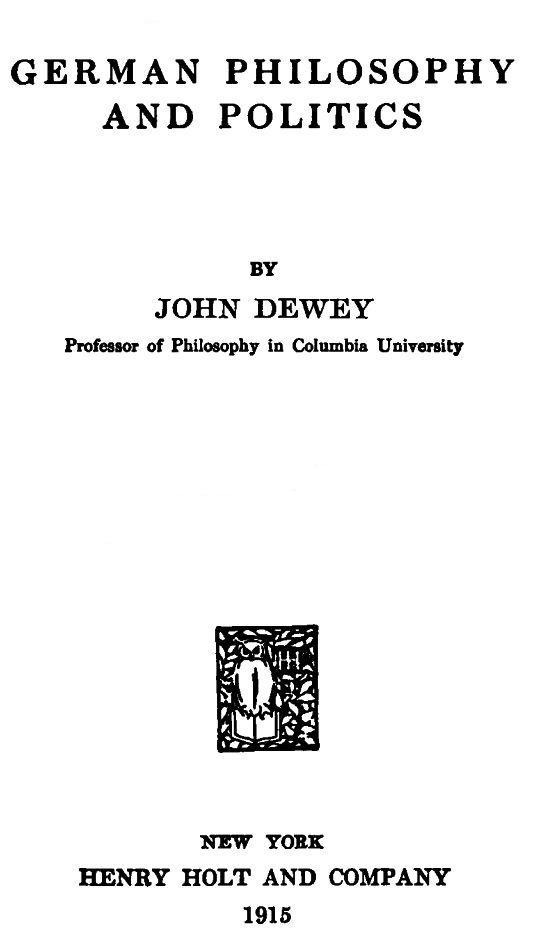
The author presents three linked lectures analyzing how German philosophical doctrines shaped political thought and institutions. He traces currents from Leibnizian harmony through Kant's moral dualism, exploring tensions between natural impulses and reason, and distinguishes civilization as spontaneous social development from Kultur as a deliberate, moralized formation. He examines attitudes toward history, the claim that ideas both reflect and influence social change, and debates over whether intellectual life can direct political ends. Close readings of key thinkers and critiques of evolutionary or mechanistic accounts of mind show how philosophical concepts informed conceptions of state, society, and cultural identity.
About the Author
More Books by This Author
6 picks
 China, Japan and the U.S.A. / Present-Day Conditions in the Far East and Their Bearing on the Washington Conference
by John Dewey
China, Japan and the U.S.A. / Present-Day Conditions in the Far East and Their Bearing on the Washington Conference
by John Dewey
 Creative Intelligence: Essays in the Pragmatic Attitude
by John Dewey
Creative Intelligence: Essays in the Pragmatic Attitude
by John Dewey
 Democracy and Education: An Introduction to the Philosophy of Education
by John Dewey
Democracy and Education: An Introduction to the Philosophy of Education
by John Dewey
 Essays in Experimental Logic
by John Dewey
Essays in Experimental Logic
by John Dewey
 Ethics
by John Dewey
Ethics
by John Dewey
 How We Think
by John Dewey
How We Think
by John Dewey
You May Also Like
6 picks