
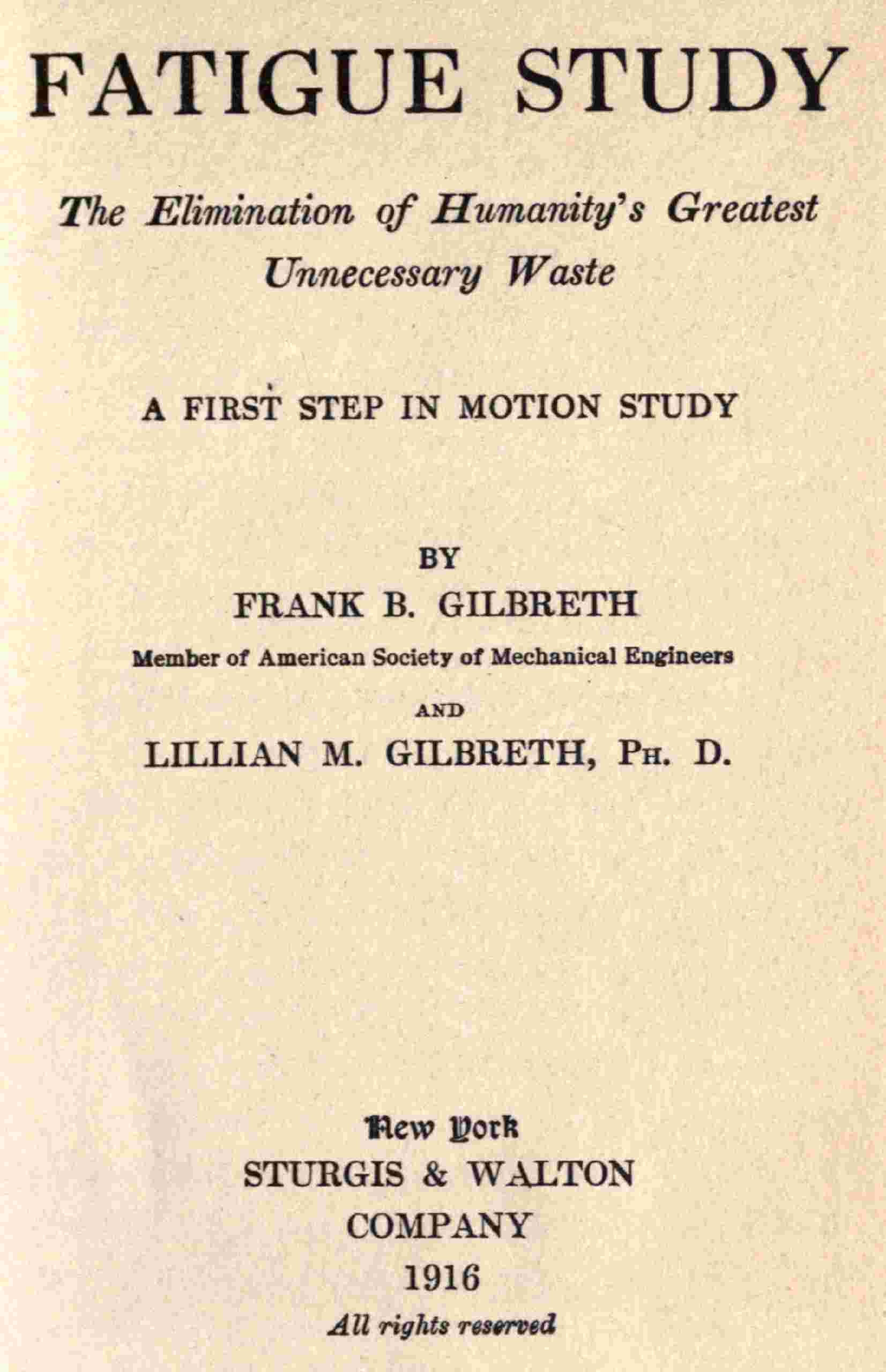
About This Book
The authors define fatigue as the after-effect of work that reduces capacity and generates waste, then set out practical and scientific methods to identify, measure, and eliminate unnecessary fatigue. They describe how to conduct fatigue surveys, introduce immediate provisions for rest and better chairs, and present a Home Reading Box movement as an illustration of welfare practice. Guidance covers lighting, ventilation, safety, tools, workbench and clothing arrangements, while a fatigue museum gathers examples of devices. Measurement approaches include motion and micromotion study with cyclegraph and chronocyclegraph tools, and the text explains standardizing work, testing adjustments, and implementing improved practices.
About the Author

You May Also Like
6 picks
 The Natural Cure of Consumption, Constipation, Bright's Disease, Neuralgia, Rheumatism, "Colds" (Fevers), Etc. / How Sickness Originates, and How to Prevent It. A Health Manual for the People.
by C. E. Page
The Natural Cure of Consumption, Constipation, Bright's Disease, Neuralgia, Rheumatism, "Colds" (Fevers), Etc. / How Sickness Originates, and How to Prevent It. A Health Manual for the People.
by C. E. Page
 The Eugenic Marriage, Volume 2 (of 4) / A Personal Guide to the New Science of Better Living and Better Babies
by W. Grant Hague
The Eugenic Marriage, Volume 2 (of 4) / A Personal Guide to the New Science of Better Living and Better Babies
by W. Grant Hague
 Treatment of hemorrhoids, and other non-malignant rectal diseases
by W. P. Agnew
Treatment of hemorrhoids, and other non-malignant rectal diseases
by W. P. Agnew
 Science in the Kitchen / A Scientific Treatise On Food Substances and Their Dietetic Properties, Together with a Practical Explanation of the Principles of Healthful Cookery, and a Large Number of Original, Palatable, and Wholesome Recipes
by E. E. Kellogg
Science in the Kitchen / A Scientific Treatise On Food Substances and Their Dietetic Properties, Together with a Practical Explanation of the Principles of Healthful Cookery, and a Large Number of Original, Palatable, and Wholesome Recipes
by E. E. Kellogg
 脾胃論
by Gao Li
脾胃論
by Gao Li
 Round the Red Lamp: Being Facts and Fancies of Medical Life
by Arthur Conan Doyle
Round the Red Lamp: Being Facts and Fancies of Medical Life
by Arthur Conan Doyle