
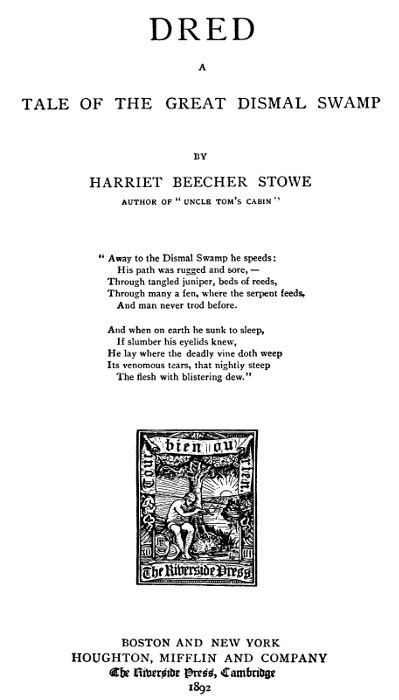
About This Book
The novel portrays life in slave-holding regions through interwoven stories of enslaved people, white neighbors, and local institutions, contrasting plantation society with the swamp as a refuge. It traces conspiracies, religious gatherings, legal battles, and episodes of violence and flight, following individuals who resist bondage and those who enforce or contest the system. Scenes alternate between domestic moments, camp-meetings, courts, and the swamp's daily life, while moral and legal arguments about slavery are dramatized, including a fictionalized judicial opinion, culminating in trials, escapes, and reckonings that expose the human costs of the institution.
About the Author

More Books by This Author
6 picks
 A reply to "The affectionate and Christian address of many thousands of women of Great Britain and Ireland, to their sisters, the women of the United States of America."
by Harriet Beecher Stowe
A reply to "The affectionate and Christian address of many thousands of women of Great Britain and Ireland, to their sisters, the women of the United States of America."
by Harriet Beecher Stowe
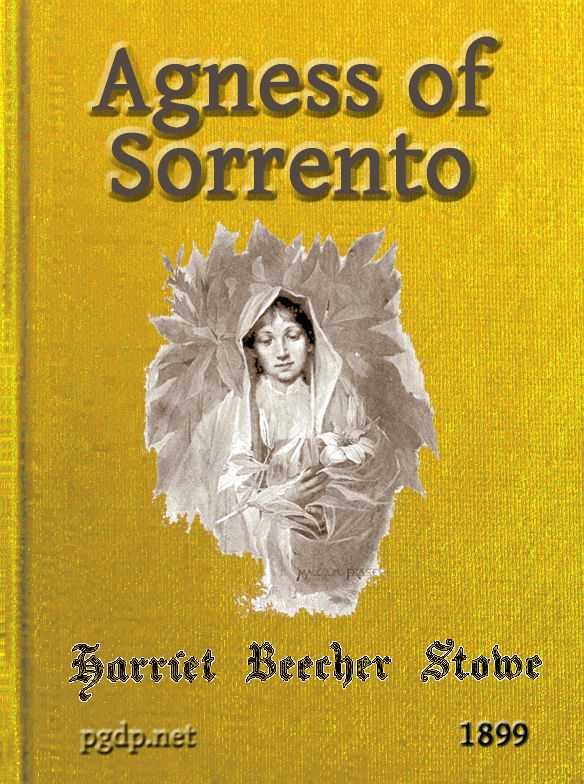 Agnes of Sorrento
by Harriet Beecher Stowe
Agnes of Sorrento
by Harriet Beecher Stowe
 Betty's Bright Idea; Deacon Pitkin's Farm; and the First Christmas of New England
by Harriet Beecher Stowe
Betty's Bright Idea; Deacon Pitkin's Farm; and the First Christmas of New England
by Harriet Beecher Stowe
 De kleine vossen
by Harriet Beecher Stowe
De kleine vossen
by Harriet Beecher Stowe
 De Slavernij: Vervolg en Sleutel op De Negerhut
by Harriet Beecher Stowe
De Slavernij: Vervolg en Sleutel op De Negerhut
by Harriet Beecher Stowe
 Flowers and fruit from the writings of Harriet Beecher Stowe
by Harriet Beecher Stowe
Flowers and fruit from the writings of Harriet Beecher Stowe
by Harriet Beecher Stowe
You May Also Like
6 picks
 Sunny Boy and His Playmates
by Ramy Allison White
Sunny Boy and His Playmates
by Ramy Allison White
 The Argonauts of North Liberty
by Bret Harte
The Argonauts of North Liberty
by Bret Harte
 Historia del famoso predicador Fray Gerundio de Campazas, alias Zotes (1 de 2)
by José Francisco de Isla
Historia del famoso predicador Fray Gerundio de Campazas, alias Zotes (1 de 2)
by José Francisco de Isla
 A rebours
by J.-K. Huysmans
A rebours
by J.-K. Huysmans
 Two Knapsacks: A Novel of Canadian Summer Life
by John Campbell
Two Knapsacks: A Novel of Canadian Summer Life
by John Campbell
 The Entail; or, The Lairds of Grippy
by John Galt
The Entail; or, The Lairds of Grippy
by John Galt