
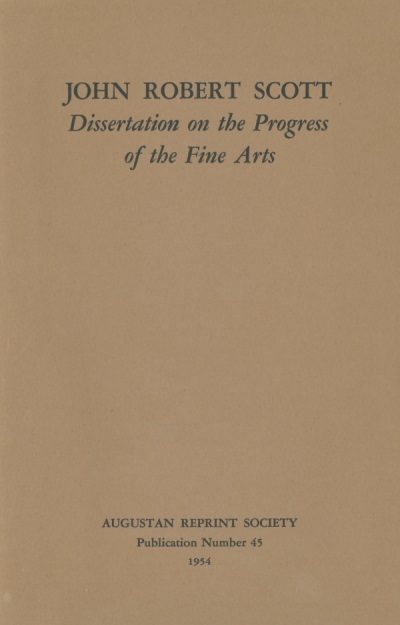
About This Book
The author analyzes why major fine art has historically appeared in simpler societies by examining the social conditions that supported it, using sculpture (and by extension poetry) as the example. He attributes artistic flourishing to small, decentralized communities where public ritual, bodily display, and communal functions made artists intimately connected to popular life, producing original, native work. He contrasts that with contemporary complex societies that foster technical and intellectual achievements but lack the conditions for powerful art, and he proposes that enlightened social reform could reconcile modern complexity with the communal features necessary for major artistic creation.
About the Author

You May Also Like
6 picks
 Four Phases of Morals: Socrates, Aristotle, Christianity, Utilitarianism
by John Stuart Blackie
Four Phases of Morals: Socrates, Aristotle, Christianity, Utilitarianism
by John Stuart Blackie
 Memoirs of the Duchesse de Dino (Afterwards Duchesse de Talleyrand et de Sagan), 1836-1840
by duchesse de Dorothée Dino
Memoirs of the Duchesse de Dino (Afterwards Duchesse de Talleyrand et de Sagan), 1836-1840
by duchesse de Dorothée Dino
 The thread of life
by Infanta of Spain Eulalia
The thread of life
by Infanta of Spain Eulalia
 The Service
by Henry David Thoreau
The Service
by Henry David Thoreau
 Famous Firesides of French Canada
by Mary Wilson Alloway
Famous Firesides of French Canada
by Mary Wilson Alloway
 Gems in the Smithsonian Institution
by Paul E. Desautels
Gems in the Smithsonian Institution
by Paul E. Desautels