
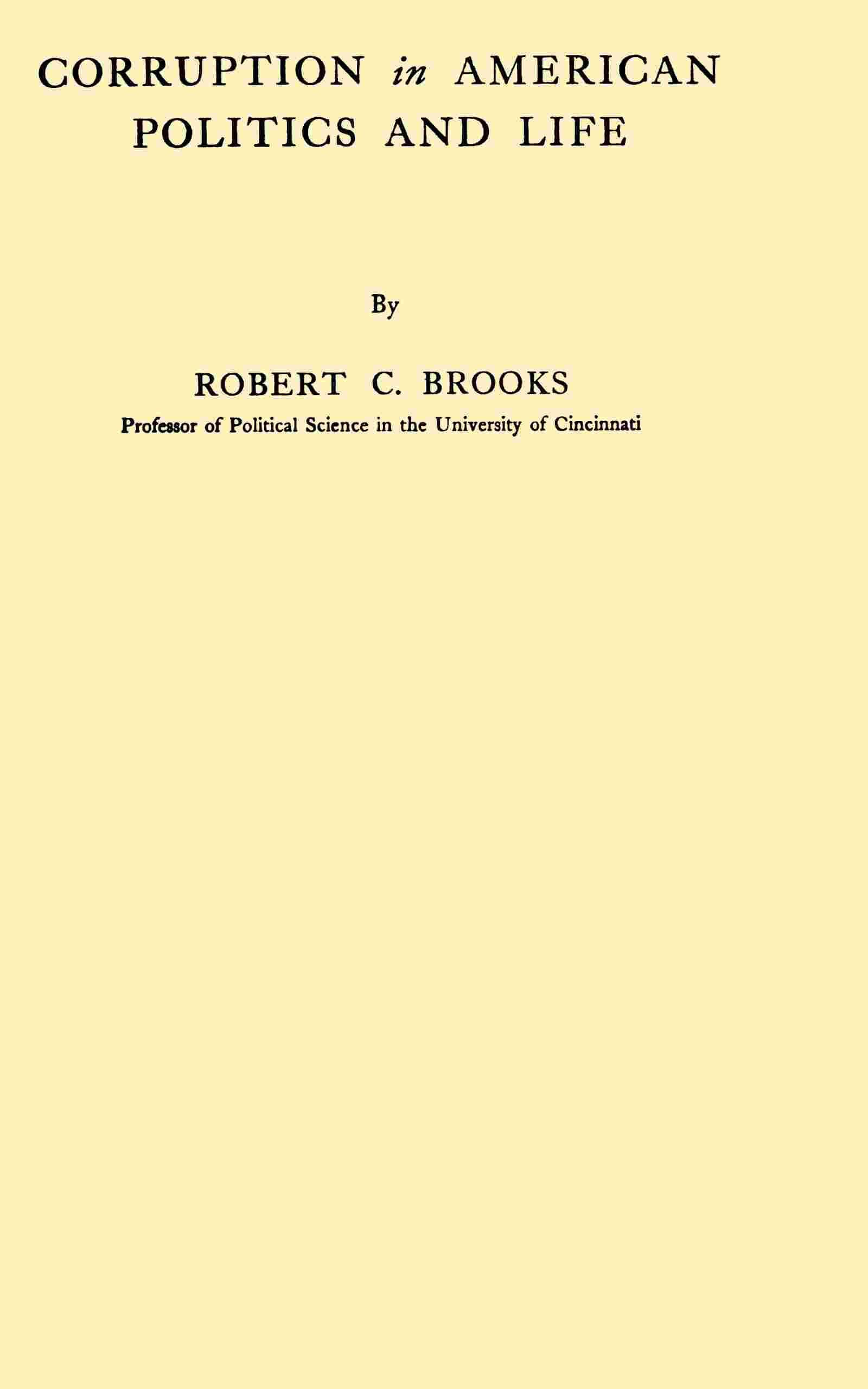
About This Book
The author offers a systematic, dispassionate analysis of political corruption, first examining and rebutting common defenses such as claims that corruption promotes business efficiency, protects social order, or is an inevitable stage of progress. He proposes a clear ethical definition that distinguishes corruption from bribery and from mere inefficiency, analyzes motives, rewards, degrees of personal and partisan interest, and shows how corruption adapts across institutions. Historical and comparative examples illustrate persistent forms, changing modalities, and practical limits, while later chapters extend the inquiry to corrupting influences in professions, journalism, and higher education.
About the Author

You May Also Like
6 picks
 Letters from a Farmer in Pennsylvania, to the Inhabitants of the British Colonies
by John Dickinson
Letters from a Farmer in Pennsylvania, to the Inhabitants of the British Colonies
by John Dickinson
 A Blockaded Family: Life in Southern Alabama during the Civil War
by Parthenia Antoinette Hague
A Blockaded Family: Life in Southern Alabama during the Civil War
by Parthenia Antoinette Hague
 New Witnesses for God (Volume 3 of 3)
by B. H. Roberts
New Witnesses for God (Volume 3 of 3)
by B. H. Roberts
 Preserving Louisiana's Legacy: Everyone Can Help
by Nancy W. Hawkins
Preserving Louisiana's Legacy: Everyone Can Help
by Nancy W. Hawkins
 History of Company F, 1st Regiment, R.I. Volunteers, during the Spring and Summer of 1861
by Charles H. Clarke
History of Company F, 1st Regiment, R.I. Volunteers, during the Spring and Summer of 1861
by Charles H. Clarke
 Down the Mother Lode
by Vivia Hemphill
Down the Mother Lode
by Vivia Hemphill