
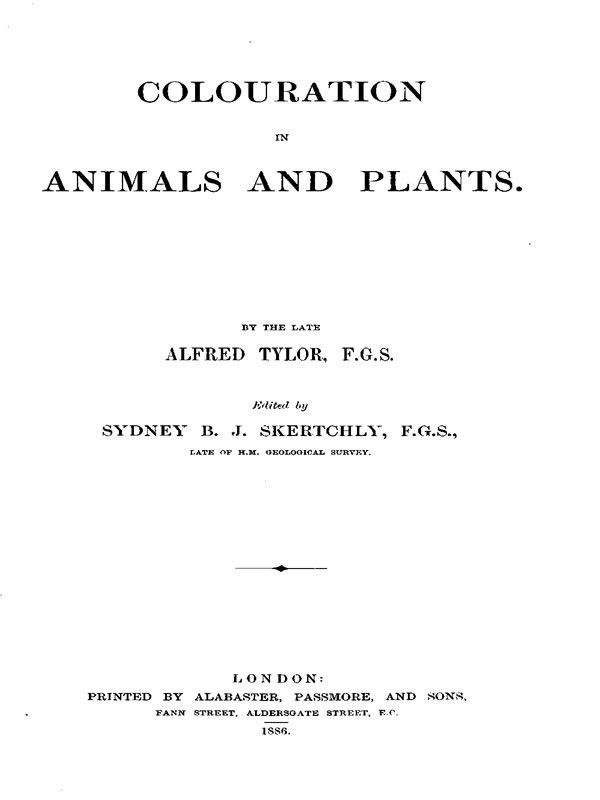
About This Book
The author examines the origins and principles of colouration across animals and plants, arguing that decorative patterns arise from structural and functional organization: pigments in transparent forms are applied to organs and the same primitive principles persist in opaque tissues. He proposes a law of emphasis whereby function-localized coloring concentrates, and shows how symmetry and repetition follow from like parts being similarly decorated. The text surveys colour perception, spots and stripes, mimicry and seasonal varieties, and details colouration in protozoa, coelenterates, arthropods, vertebrates and plants, while considering inherited memory as a factor shaping patterns and concluding with general principles illustrated by plates.
About the Author

You May Also Like
 Garden Pests in New Zealand / A Popular Manual for Practical Gardeners, Farmers and Schools
by David Miller
Garden Pests in New Zealand / A Popular Manual for Practical Gardeners, Farmers and Schools
by David Miller
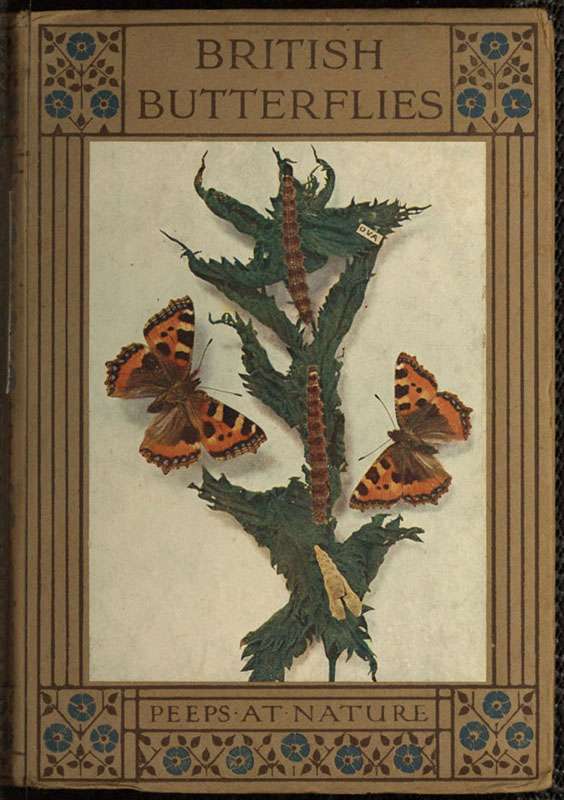 British Butterflies
by Alexander Morrison Stewart
British Butterflies
by Alexander Morrison Stewart
 Insectivorous Plants
by Charles Darwin
Insectivorous Plants
by Charles Darwin
 Under the Trees and Elsewhere
by Hamilton Wright Mabie
Under the Trees and Elsewhere
by Hamilton Wright Mabie
 The Adventures of Bob White
by Thornton W. Burgess
The Adventures of Bob White
by Thornton W. Burgess
 The Home Acre
by Edward Payson Roe
The Home Acre
by Edward Payson Roe