
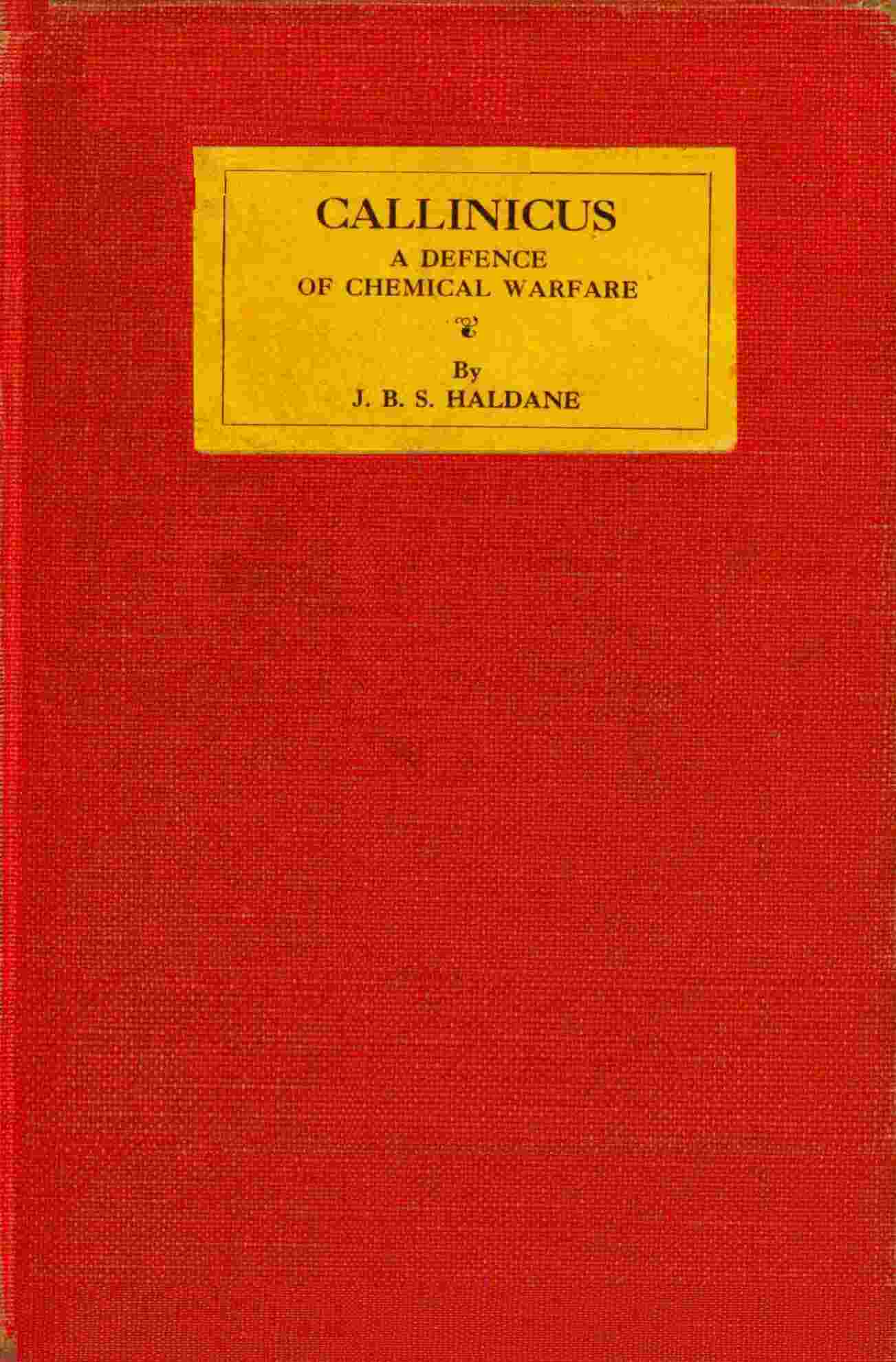
About This Book
A scientist argues that chemical weapons merit sober evaluation and preparedness rather than moral rejection, tracing their historical antecedents and legal restrictions, summarizing World War I experience, classifying agents by physiological effect and protective measures, and critiquing pacifist and political responses. He emphasizes scientific study of war's causes, discusses Hague Convention limits and methods of deployment, explains differences among respiratory poisons, lachrymators, and arsenical smokes, and considers their military utility and ethical implications while urging national readiness and technical understanding to inform policy.
About the Author
More Books by This Author
1 picks
You May Also Like
6 picks
 The Evolution of the Idea of God: An Inquiry Into the Origins of Religions
by Grant Allen
The Evolution of the Idea of God: An Inquiry Into the Origins of Religions
by Grant Allen
 Woman and the New Race
by Margaret Sanger
Woman and the New Race
by Margaret Sanger
 The Religion of Politics / A Sermon Delivered Before His Excellency John Davis, Governor, His Honor George Hull, Lieutenant Governor, The Honorable Council, And The Legislature Of Massachusetts, At The Annual Election, January 5, 1842.
by Ezra S. Gannett
The Religion of Politics / A Sermon Delivered Before His Excellency John Davis, Governor, His Honor George Hull, Lieutenant Governor, The Honorable Council, And The Legislature Of Massachusetts, At The Annual Election, January 5, 1842.
by Ezra S. Gannett
 The Great Boer War
by Arthur Conan Doyle
The Great Boer War
by Arthur Conan Doyle
 Phrenology Examined
by P. Flourens
Phrenology Examined
by P. Flourens
 A Night in the Luxembourg
by Remy de Gourmont
A Night in the Luxembourg
by Remy de Gourmont