
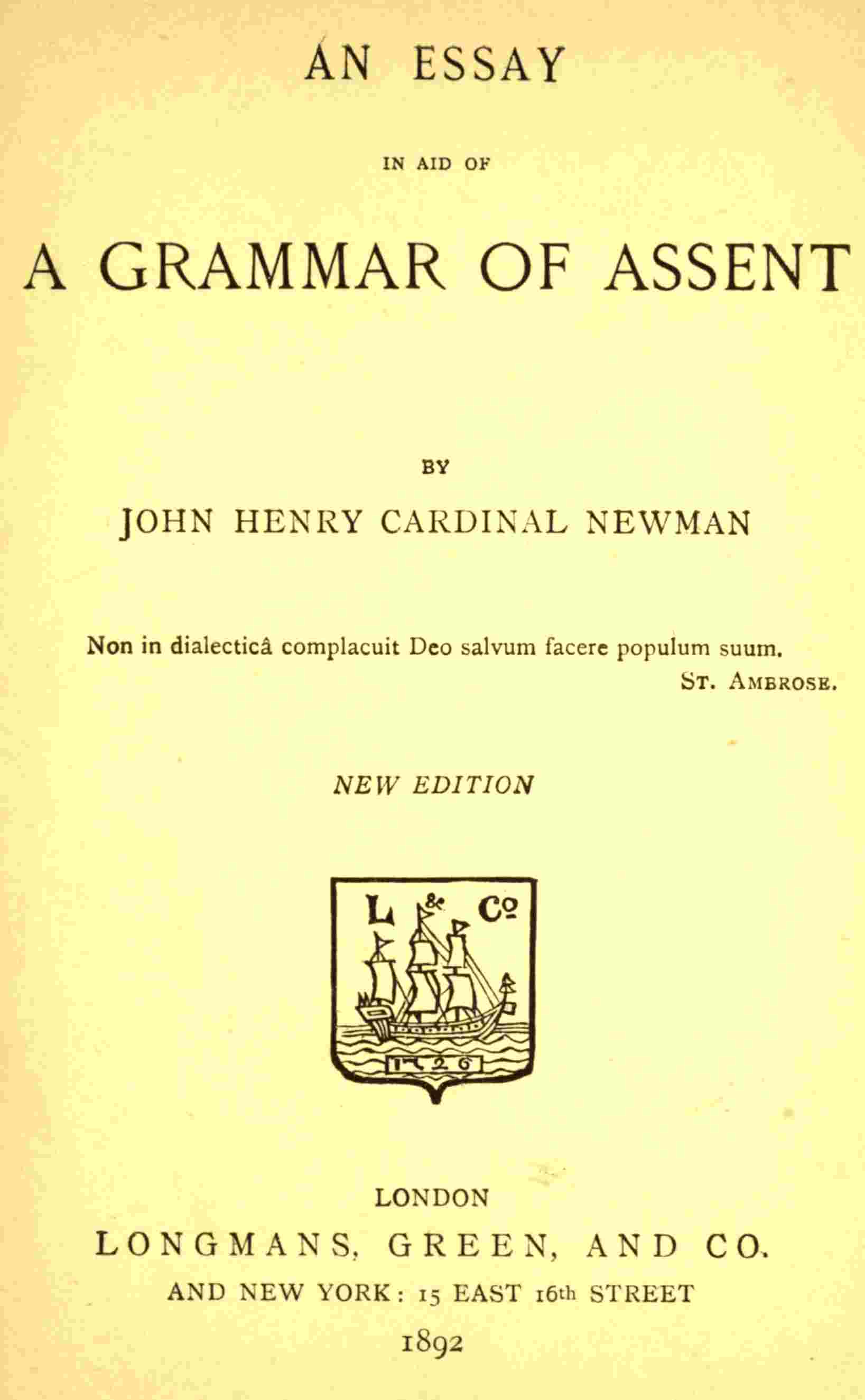
About This Book
The work analyzes how minds apprehend and accept propositions by distinguishing three mental modes—doubt, inference, and assent—and three grammatical forms—interrogative, conditional, and categorical. It differentiates notional (intellectual) from real (affective or religious) assent, examines certitude and varieties of inference (formal, informal, natural), and develops the notion of an illative sense, an habitual practical reasoning faculty that converts probability into conviction. Throughout, it applies these distinctions to questions of natural and revealed religion, showing how theological propositions are grasped, appropriated, and affirmed by different faculties of intellect and imagination.
About the Author

More Books by This Author
6 picks
 An Essay on the Development of Christian Doctrine
by John Henry Newman
An Essay on the Development of Christian Doctrine
by John Henry Newman
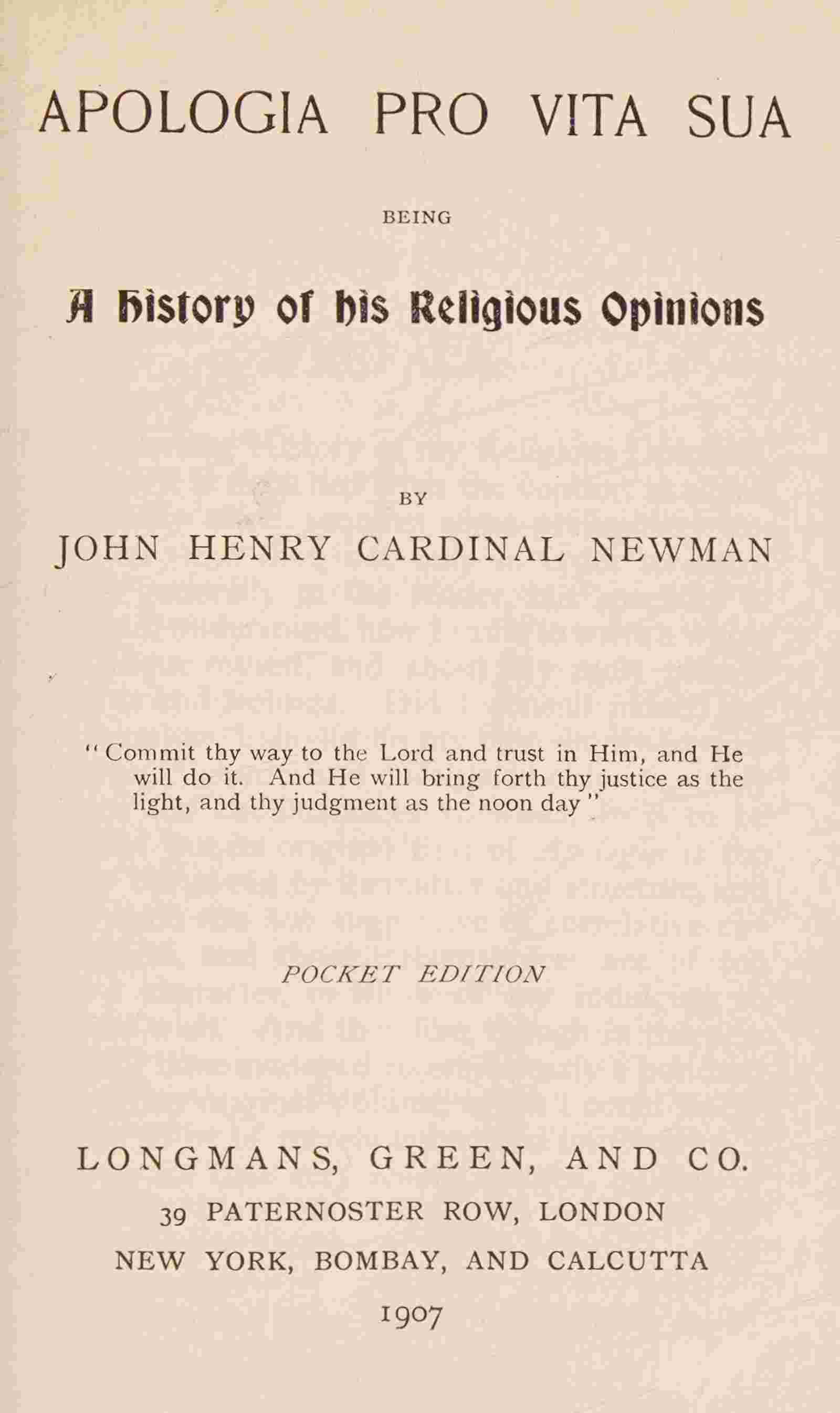 Apologia pro vita sua
by John Henry Newman
Apologia pro vita sua
by John Henry Newman
 Callista : a Tale of the Third Century
by John Henry Newman
Callista : a Tale of the Third Century
by John Henry Newman
 Dissertatiunculae Quaedam Critico-Theologicae
by John Henry Newman
Dissertatiunculae Quaedam Critico-Theologicae
by John Henry Newman
 Historical Sketches, Volume I (of 3) / The Turks in Their Relation to Europe; Marcus Tullius Cicero; Apollonius of Tyana; Primitive Christianity
by John Henry Newman
Historical Sketches, Volume I (of 3) / The Turks in Their Relation to Europe; Marcus Tullius Cicero; Apollonius of Tyana; Primitive Christianity
by John Henry Newman
 Hymni ecclesiae
by John Henry Newman
Hymni ecclesiae
by John Henry Newman
You May Also Like
6 picks
 Questionable Amusements and Worthy Substitutes
by J. M. Judy
Questionable Amusements and Worthy Substitutes
by J. M. Judy
 Socialism: Positive and Negative
by Robert Rives La Monte
Socialism: Positive and Negative
by Robert Rives La Monte
 Post-Prandial Philosophy
by Grant Allen
Post-Prandial Philosophy
by Grant Allen
 The Seven Purposes: An Experience in Psychic Phenomena
by Margaret Cameron
The Seven Purposes: An Experience in Psychic Phenomena
by Margaret Cameron
 The Church on the changing frontier
by Helen Olive Belknap
The Church on the changing frontier
by Helen Olive Belknap
 Az élet könyve
by Géza Kenedi
Az élet könyve
by Géza Kenedi