

A Discourse Upon the Origin and the Foundation of the Inequality Among Mankind
Explore more books like this:
About This Book
The author distinguishes natural or physical inequality from moral or political inequality and reconstructs a hypothetical state of nature to trace how social inequality emerges. He critiques earlier writers for importing social assumptions into that original condition and treats his account as conditional reasoning rather than history. The essay follows a sequence in which private property, reciprocal dependence, and the creation of laws and institutions transform basic needs into vested privileges, enabling some to command and others to obey. It contends that many political inequalities are founded on human convention and collective agreements rather than on an immutable law of nature, and that advancing civilization reshapes morals and relations.
About the Author
More Books by This Author
 Egy magános sétáló álmodozásai
by Jean-Jacques Rousseau
Egy magános sétáló álmodozásai
by Jean-Jacques Rousseau
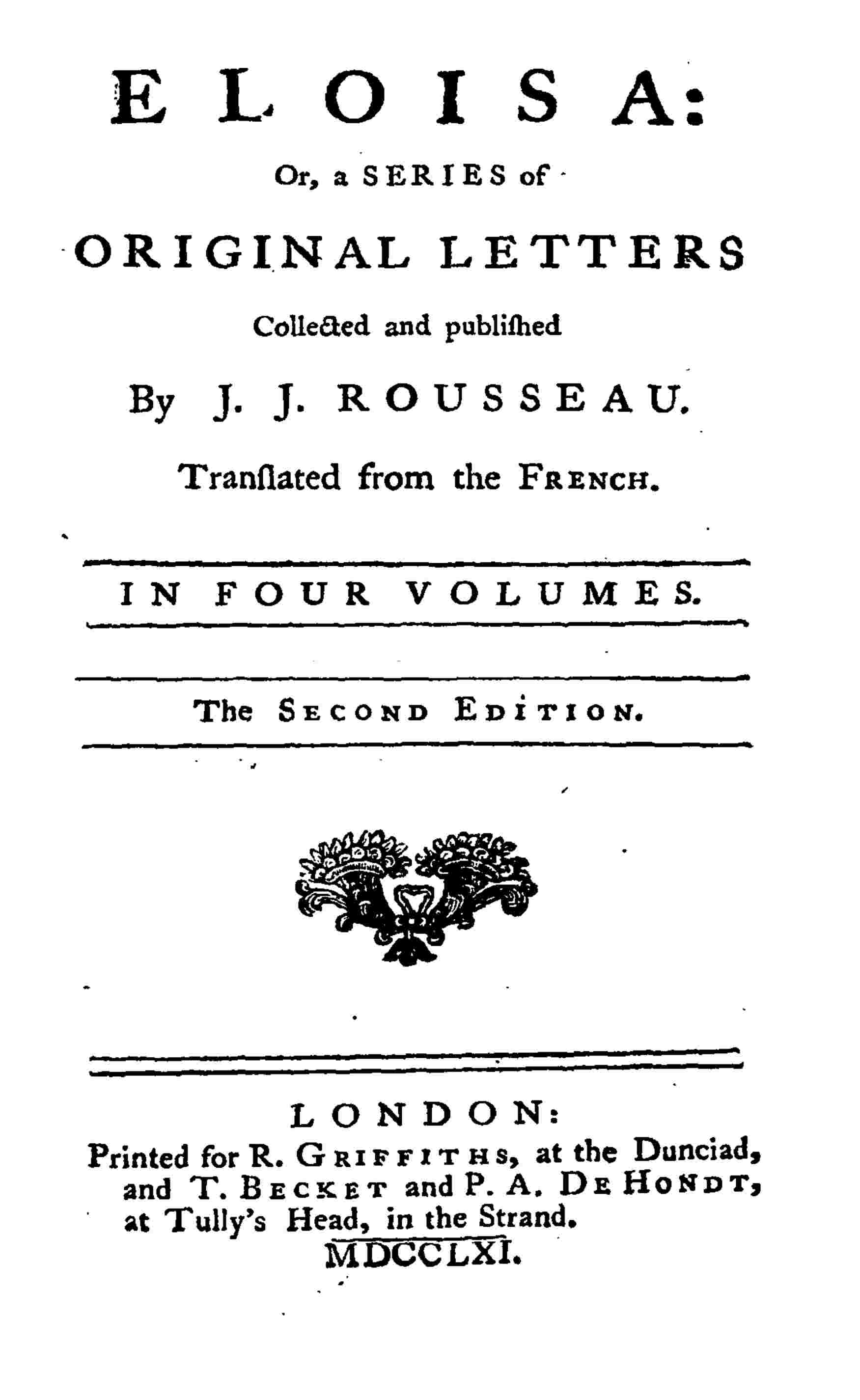 Eloisa
by Jean-Jacques Rousseau
Eloisa
by Jean-Jacques Rousseau
 Emil, vagy a nevelésről
by Jean-Jacques Rousseau
Emil, vagy a nevelésről
by Jean-Jacques Rousseau
 Emile
by Jean-Jacques Rousseau
Emile
by Jean-Jacques Rousseau
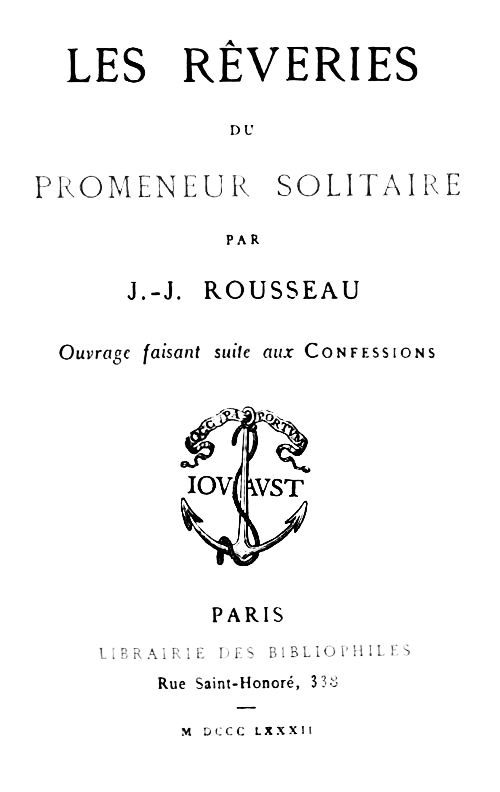 Les Rêveries du Promeneur Solitaire / Ouvrage faisant suite aux Confessions
by Jean-Jacques Rousseau
Les Rêveries du Promeneur Solitaire / Ouvrage faisant suite aux Confessions
by Jean-Jacques Rousseau
 Quotes and Images From The Confessions of Jean Jacques Rousseau
by Jean-Jacques Rousseau
Quotes and Images From The Confessions of Jean Jacques Rousseau
by Jean-Jacques Rousseau
You May Also Like
 The Old Humanities and the New Science
by Sir William Osler
The Old Humanities and the New Science
by Sir William Osler
 The Cross and Crown
by T. D. Curtis
The Cross and Crown
by T. D. Curtis
 The Governments of Europe
by Frederic Austin Ogg
The Governments of Europe
by Frederic Austin Ogg
 Narrative of a Voyage to the West Indies and Mexico in the Years 1599-1602
by Samuel de Champlain
Narrative of a Voyage to the West Indies and Mexico in the Years 1599-1602
by Samuel de Champlain
 Carta da Companhia de Jesus para o seráfico São Francisco
by José de Anchieta
Carta da Companhia de Jesus para o seráfico São Francisco
by José de Anchieta
 Betrachtungen über die Grundlagen der Philosophie
by René Descartes
Betrachtungen über die Grundlagen der Philosophie
by René Descartes